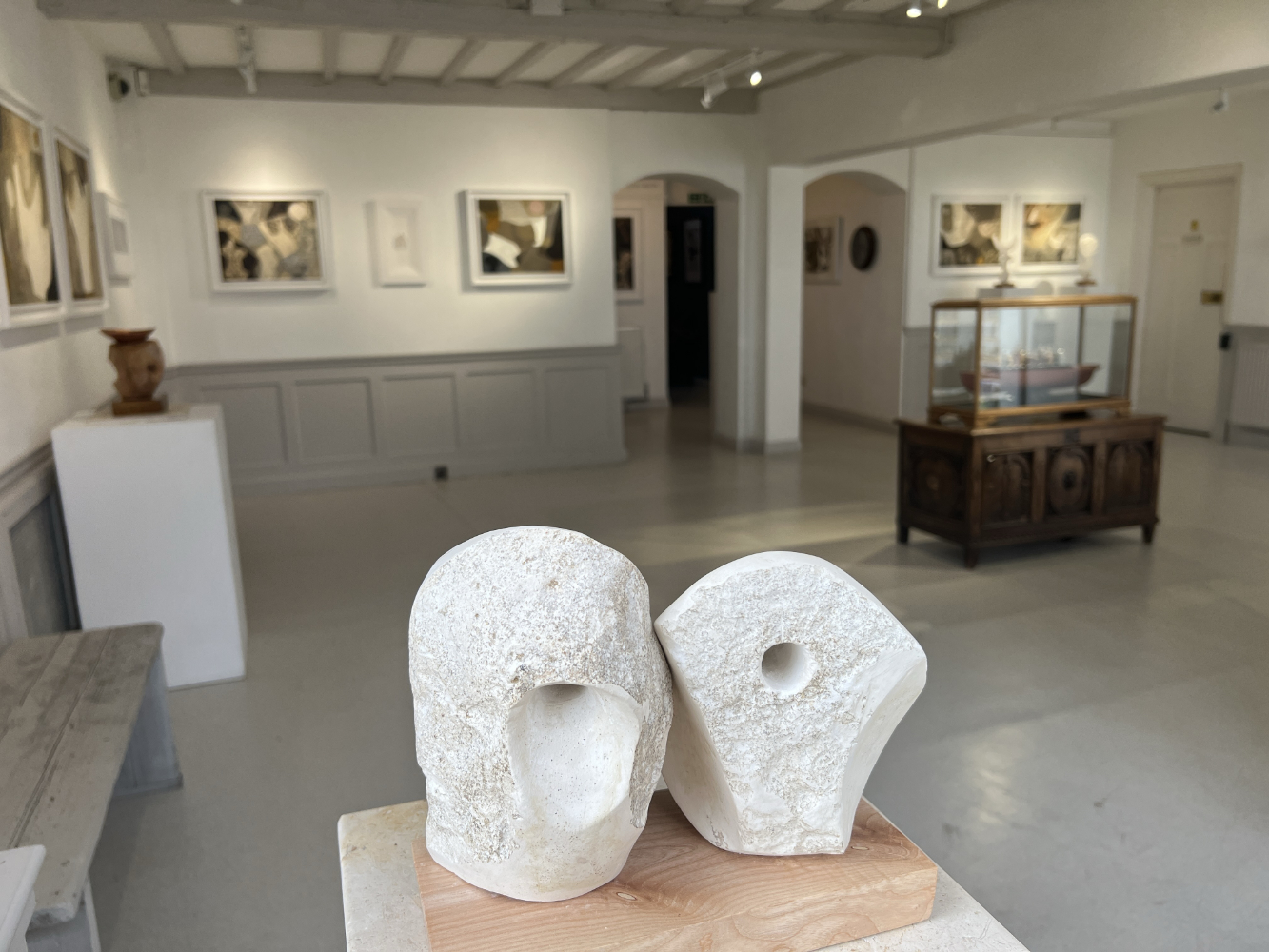
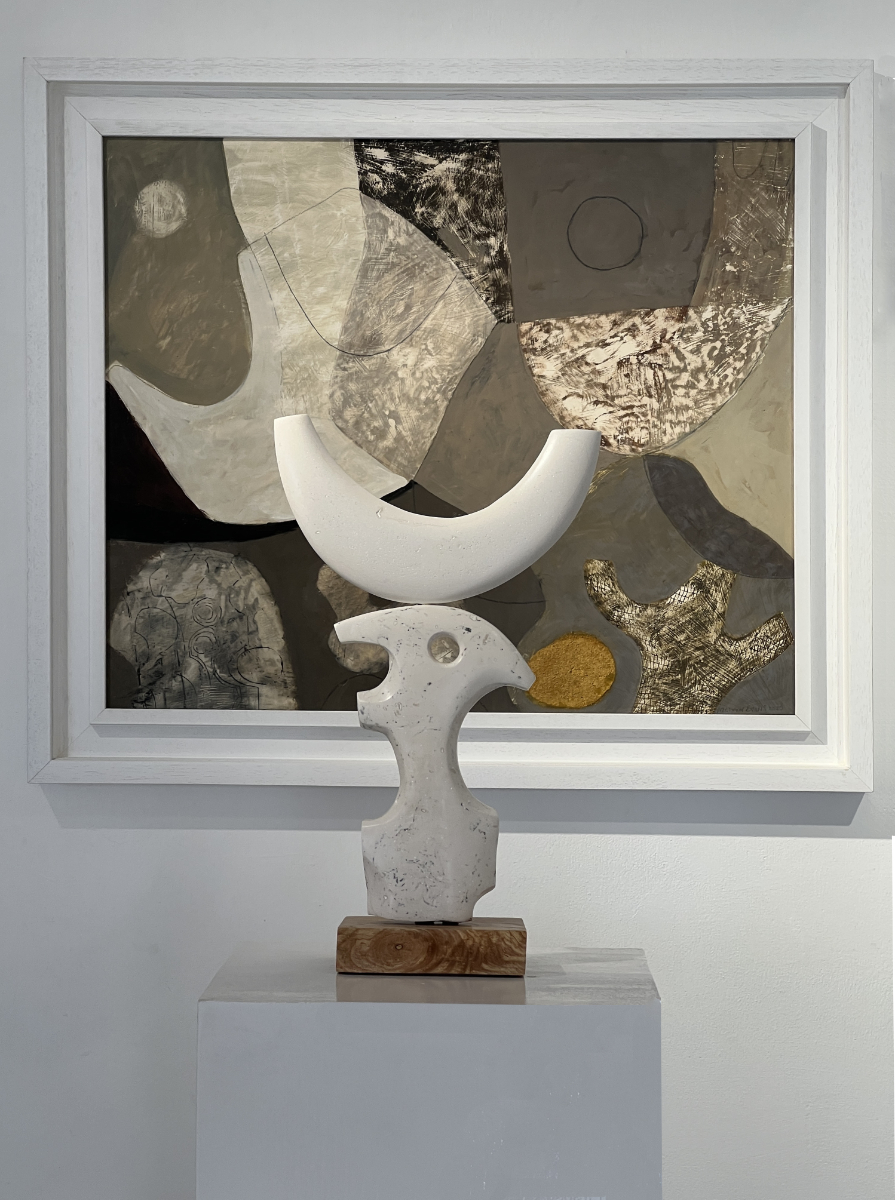
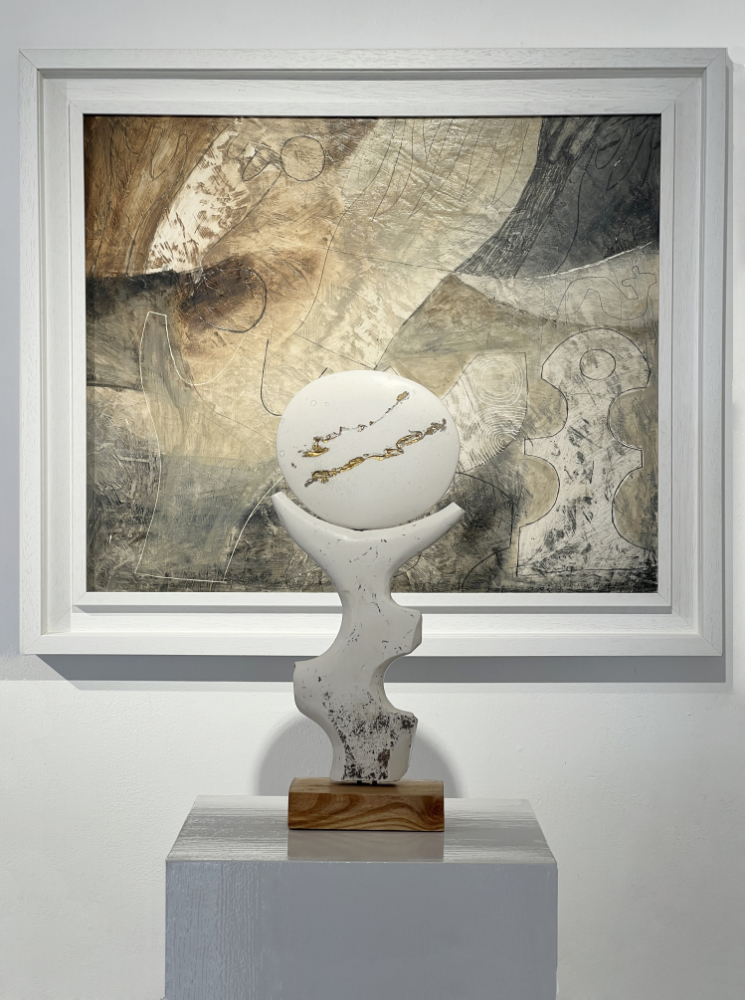
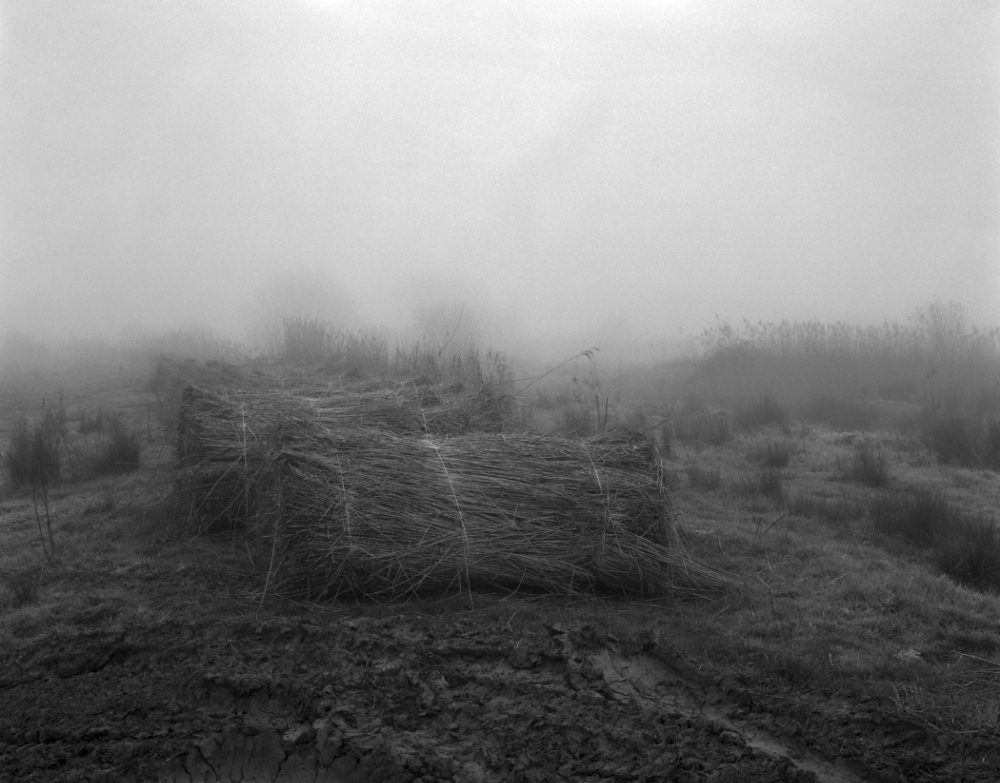
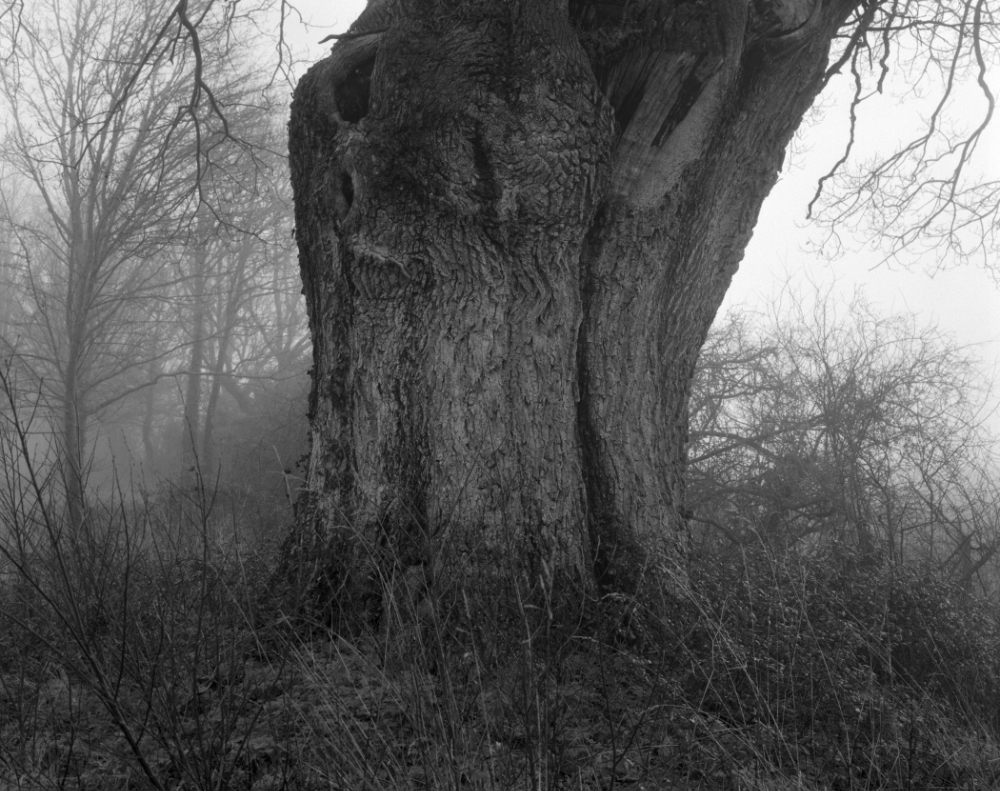
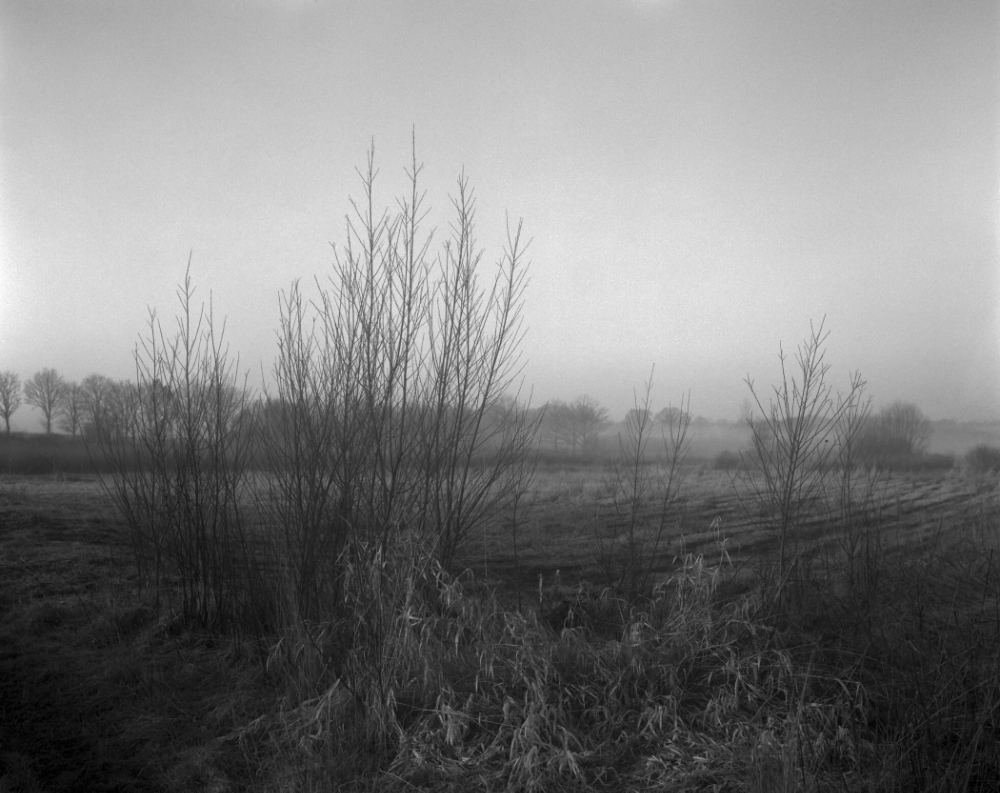
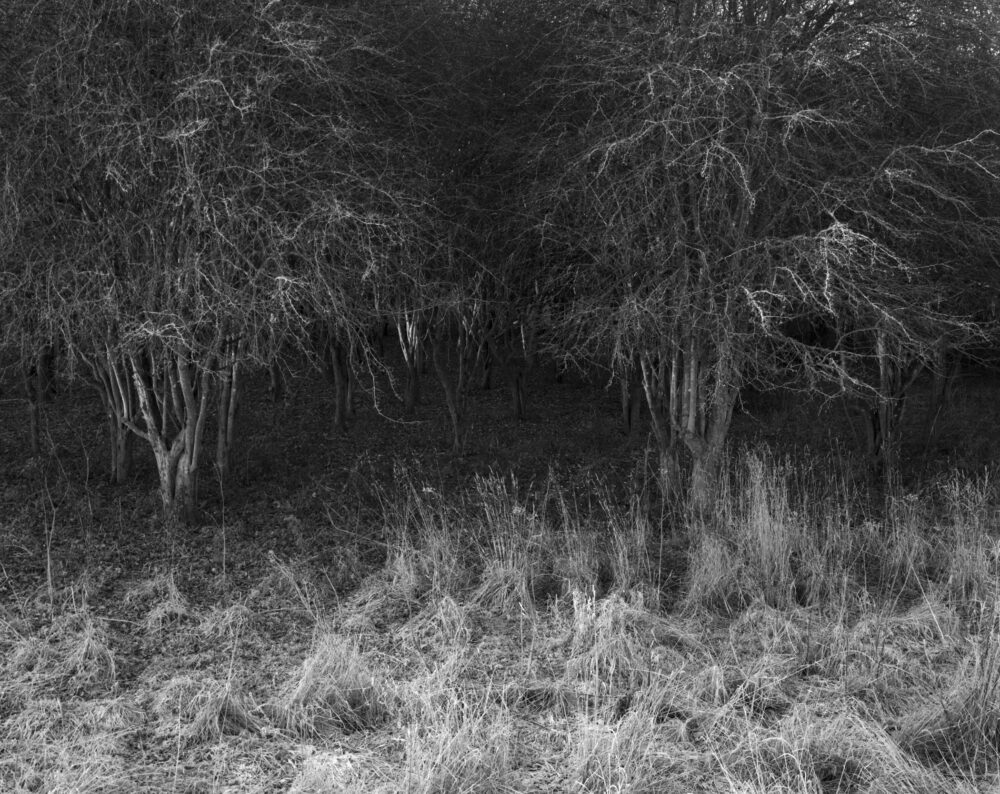
a confluence of elements
‘art, music, film & history from the lossenham landscape: explores the landscape of lossenham in the kentish countryside, bringing together the work of artist in residence russell burden and visiting artist melvyn evans. drawing directly from the site’s materials and ancient history, the exhibition reflects a shared response to place, process, and collaboration.’
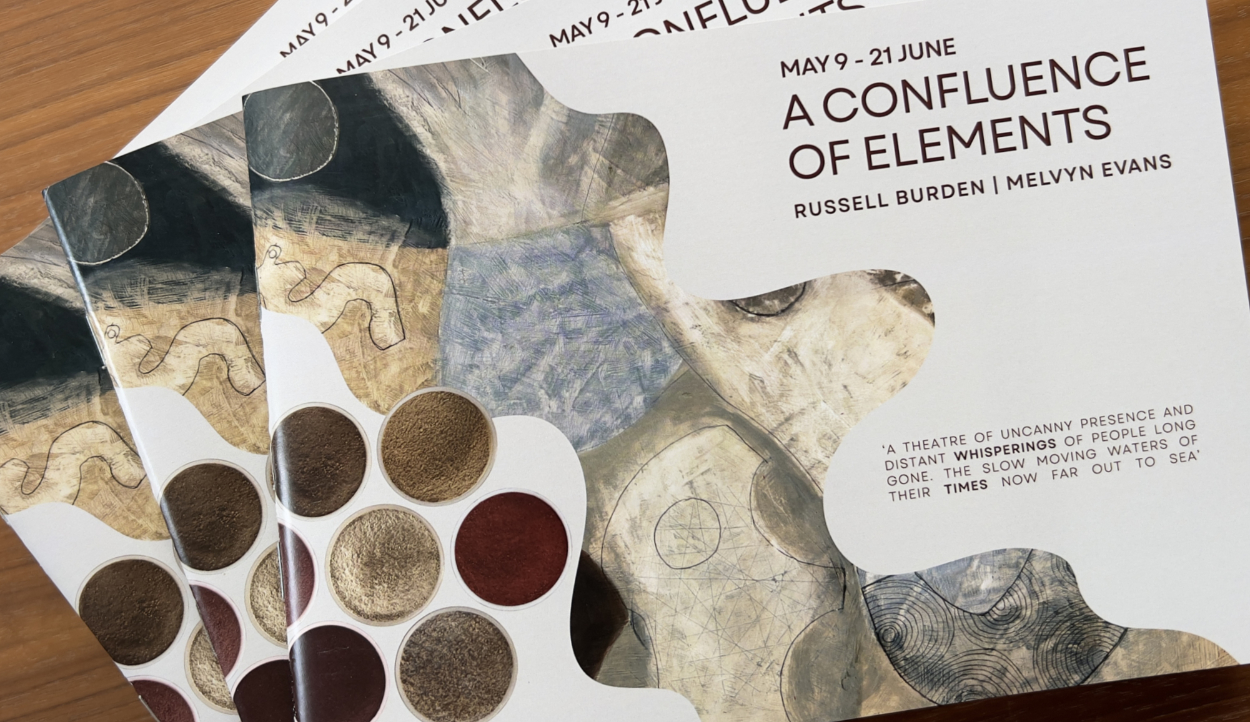
a confluence of elements catalogue
exhibition details
title: A confluence of elements
venue: rye gallery, east sussex
date: 9th may – 21st june 2026
co-artists
russell burden: foraged materials, sculpture, prints, composed soundscape
melvyn evans: painting, sculpture, bowed violin – melvynevans.com
additional lossenham based work and events
film: uncertain boundaries : a lossenham residency by kit warren with russell burden.
photographs: terry hulf
en plein air paintings: natasha cooke
two multi-artist ‘en plein air’ days at lossenham
curatorial walk and talk: led by russell burden & andrew richardson
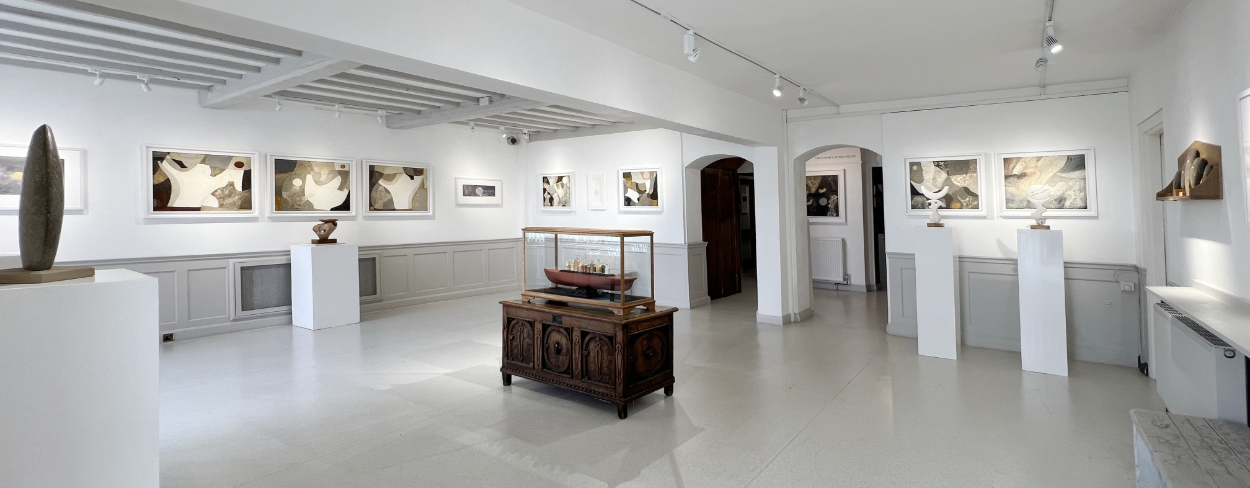
confluence room
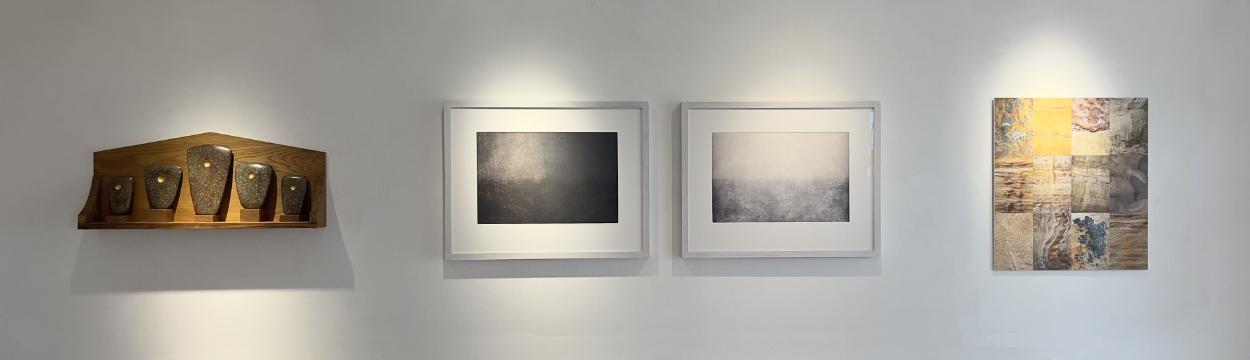
russell burden: forms of clearence, dark field light field diptych, pietra dura
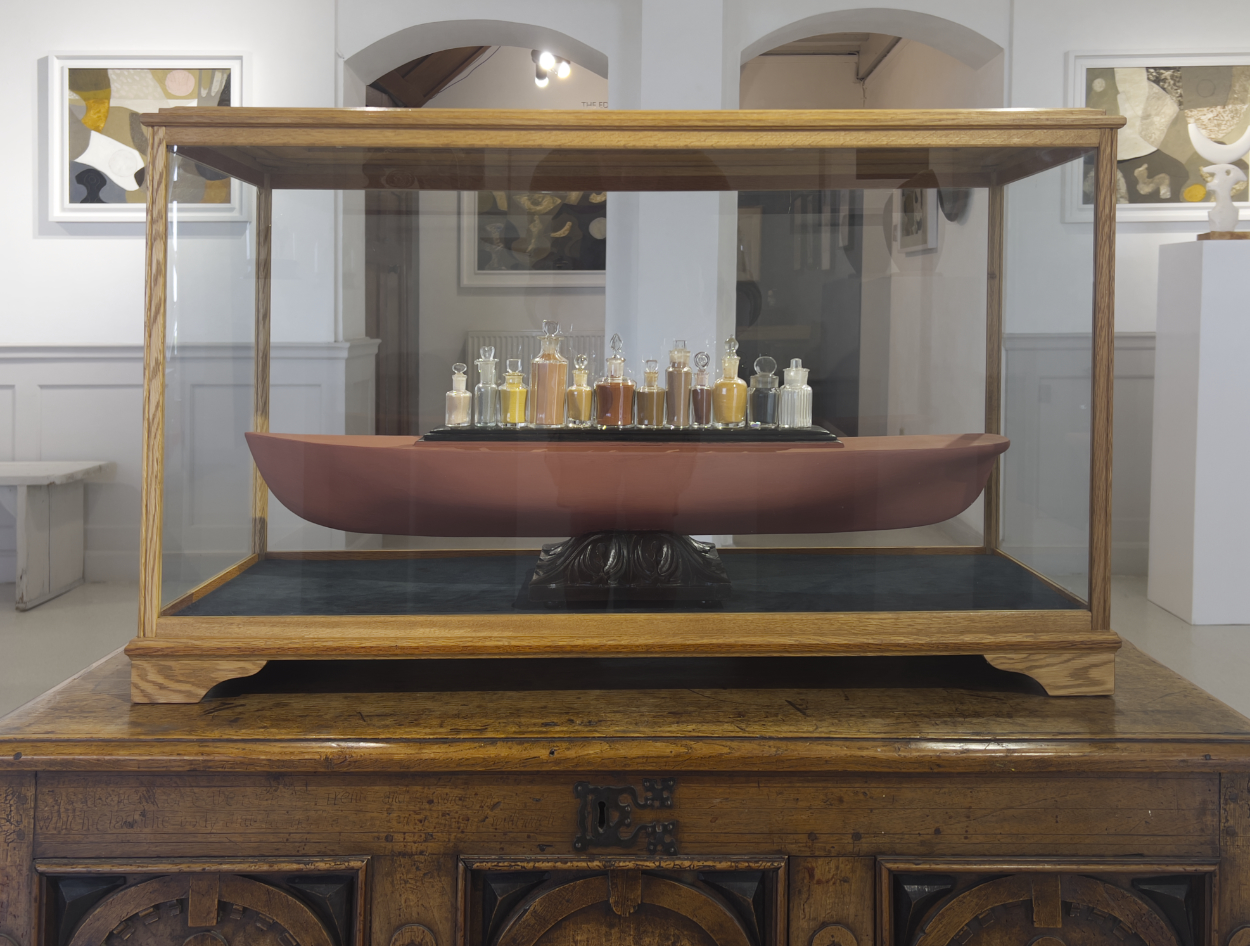
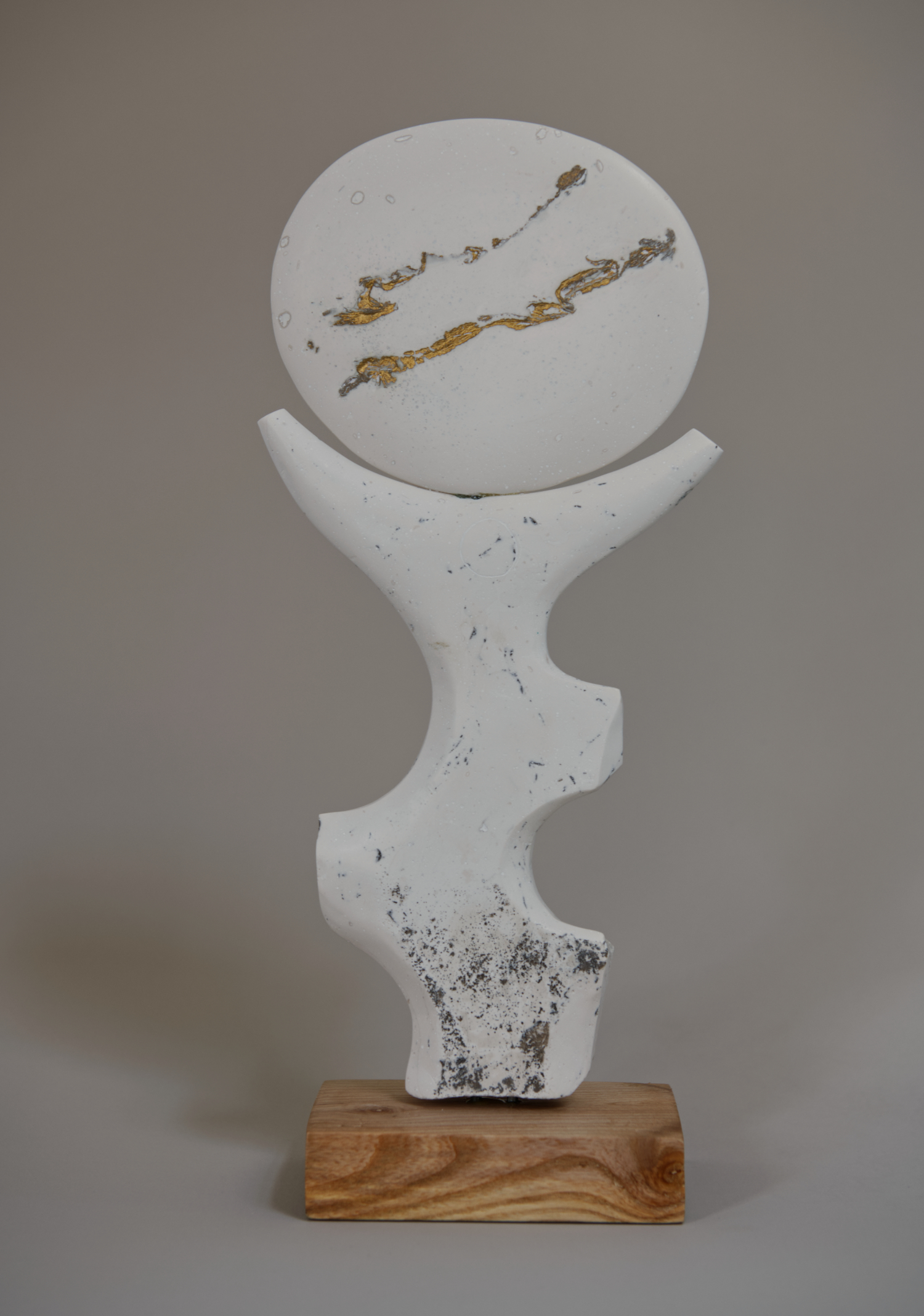
russell burden: vessel of affordances cased (lossenham 2026)
vessel of affordances
title: vessel of affordances
artist: russell burden
date: 2025/26
media: wood, plaster, hematite gesso, gold leaf, glass, Lossenham mineral pigments
image location: lossenham reed beds
dimensions: 31mm x 850mm x 210mm (excluding case)
‘sitting on an oak plinth of acanthus, egg, and dart motifs is an ark of minerals. this could be the planet earth traversing the cosmos, or it may represent a body’s minerals as they pass through its life, or perhaps the soul’s journey, or the carmelite journey from mount carmel to england, and the river to lossenham where they established a priory in the 13th century – however one wishes to imagine this vessel. the cargo, a range of pigment colours foraged from the lossenham landscape, a landscape that can hold its secrets close. worked by pestle and mortar, muller and plate, the finer the mineral is ground, the richer the colour becomes.’
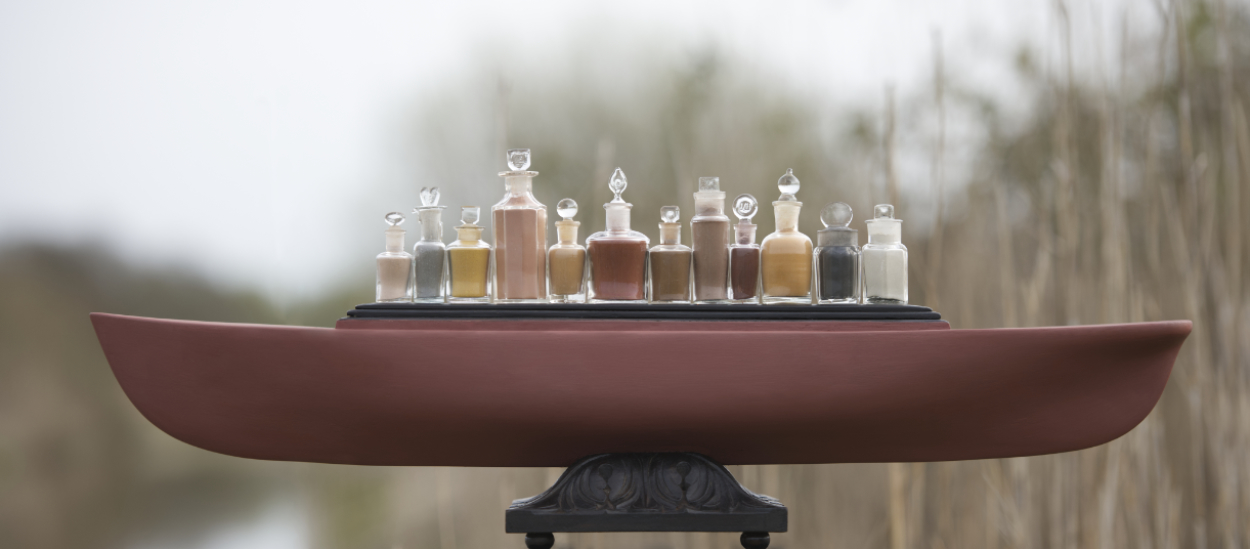
vessel of affordances (lossenham 2026)
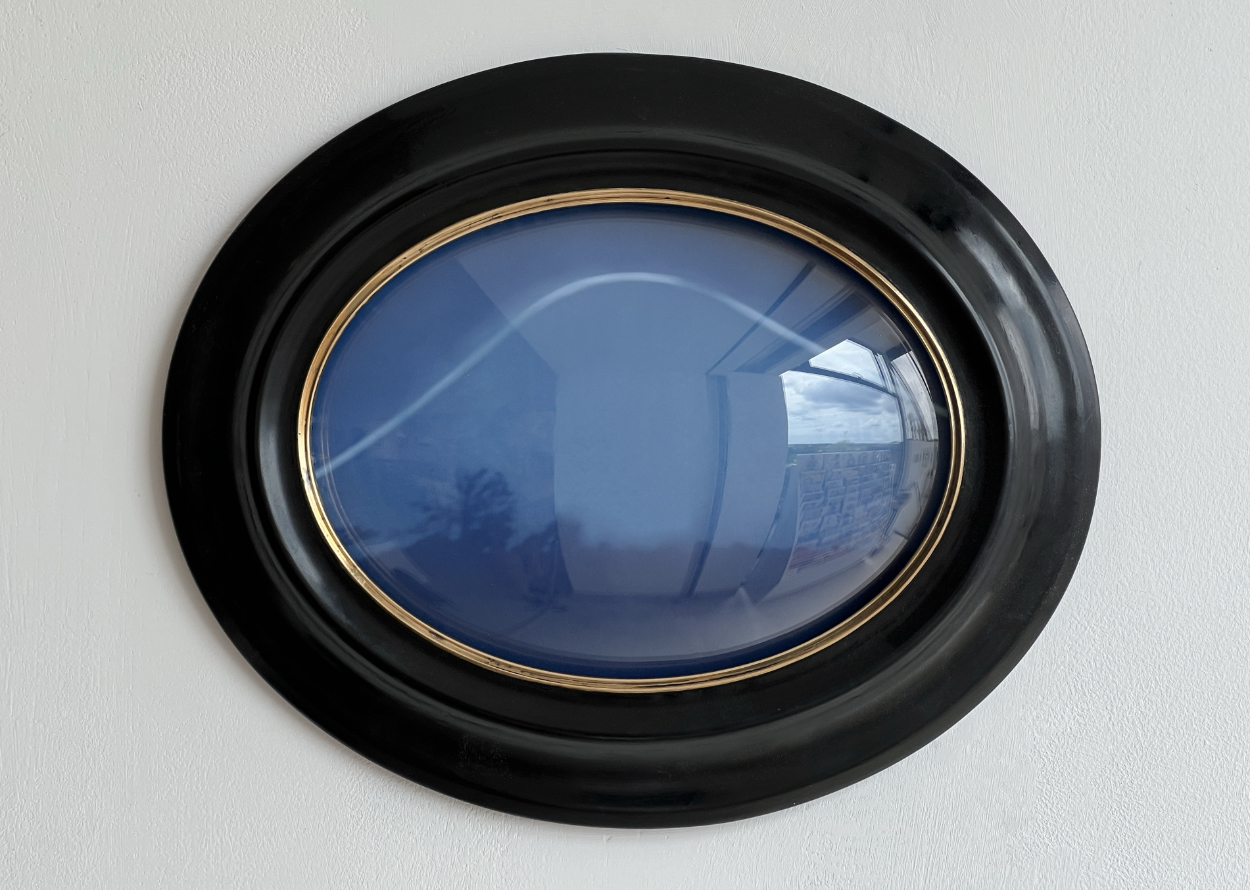
sun arc [giclee print]
title: sun arc #1, due south
artist: russell burden
date: september 2024
media: pinhole exposure
location: lossenham
dimensions: 240mm x 290mm x 40mm (including dome frame)
‘a single day’s sun-track captured in a homemade pinhole camera strapped to a tree at lossenham. it is easy to forget that the east-west track of the sun is actually the earth rotating in the opposite direction, and the peak of the track is determined by the earth’s orbit around the sun coupled with the earth’s tilt on its axis. lossenham’s approximate latitude of 51° north spins at about 770 mph, whilst orbiting the sun (by one set of calculations) at 66,615 mph, not to mention our solar system careering through our milky way galaxy at 492,540 mph. adding the motions of our galaxy, its local cluster, nested superclusters and beyond, this perceptually intangible sense of interstellar travel quickly escapes all comprehension.’
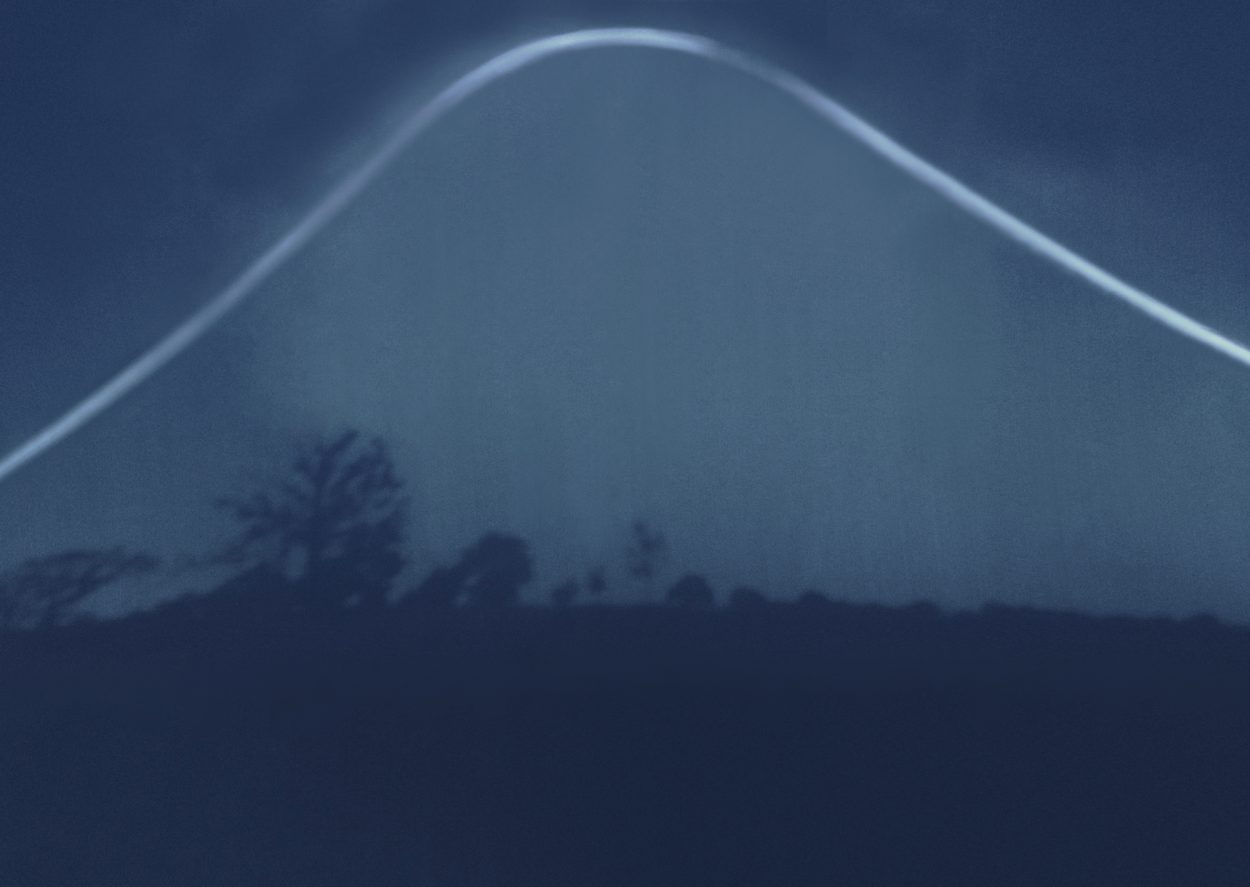
sun arc I, due south (pinhole exposure, lossenham, september, 2024)
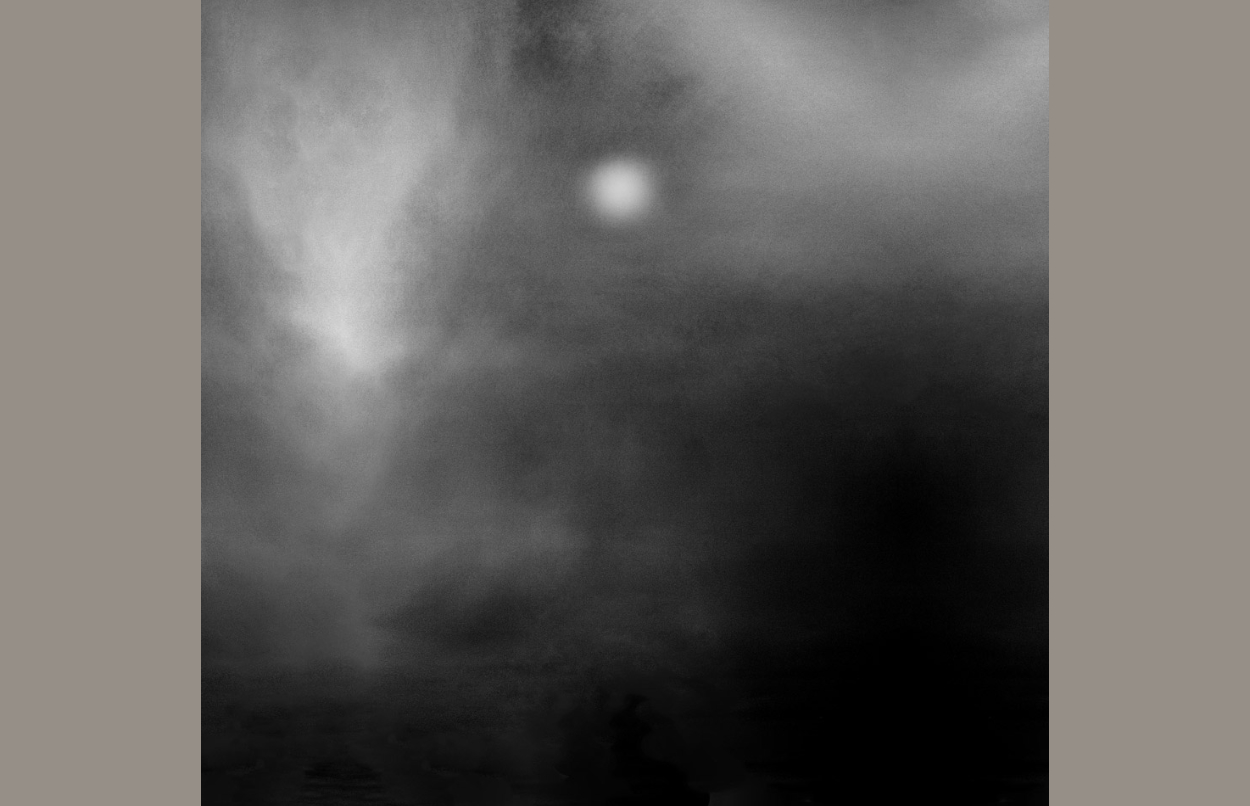
unknowing [giclee print]
title: unknowing
artist: russell burden
date: 2021
media: cotton giclee print
location: lossenham lake
dimensions: 100mm x 100mm (image)
‘created at the start of the lossenham residency, ‘unknowing’ was inspired by the absence of artistic clarity when encountering a rural landscape, steeped in a hidden carmelite history yet seemingly lacking in much of the artist’s usual subject matter. the image encapsulates the artist’s feelings and his conviction that, given time, creative inspiration naturally unfolds.’
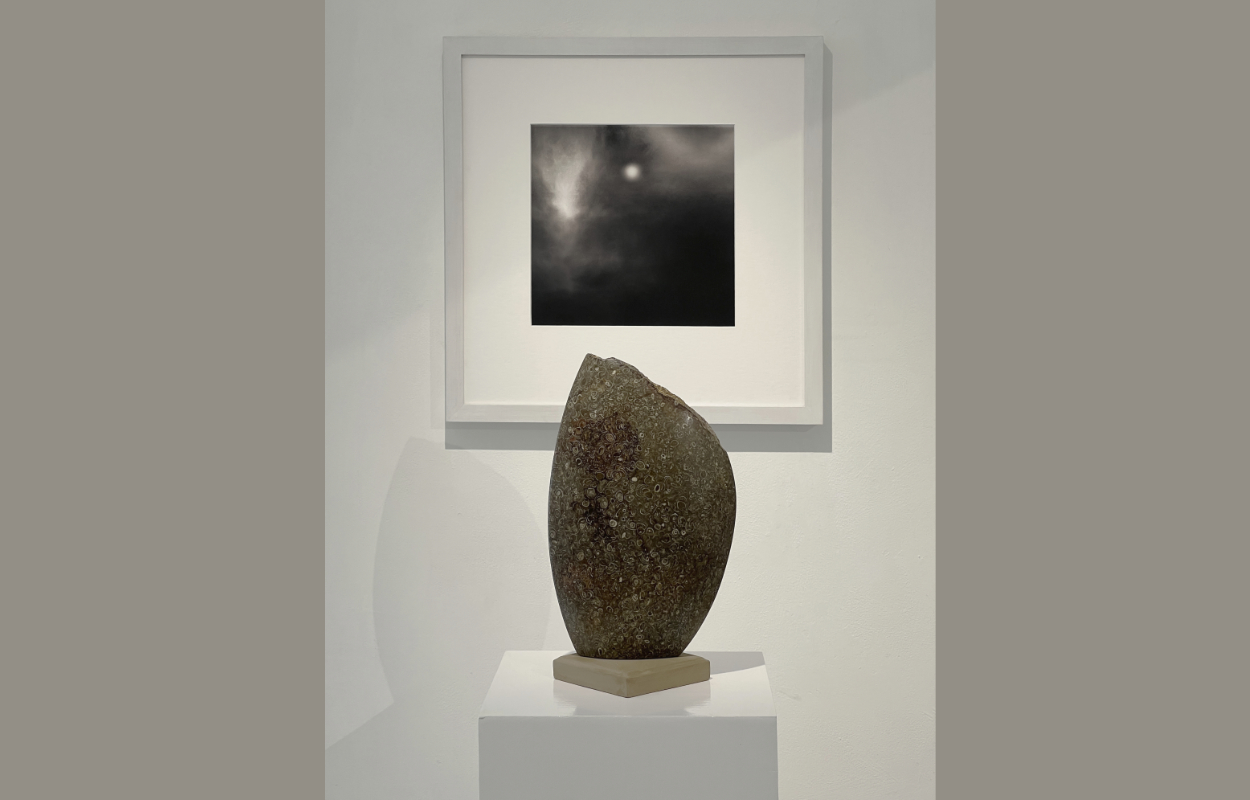
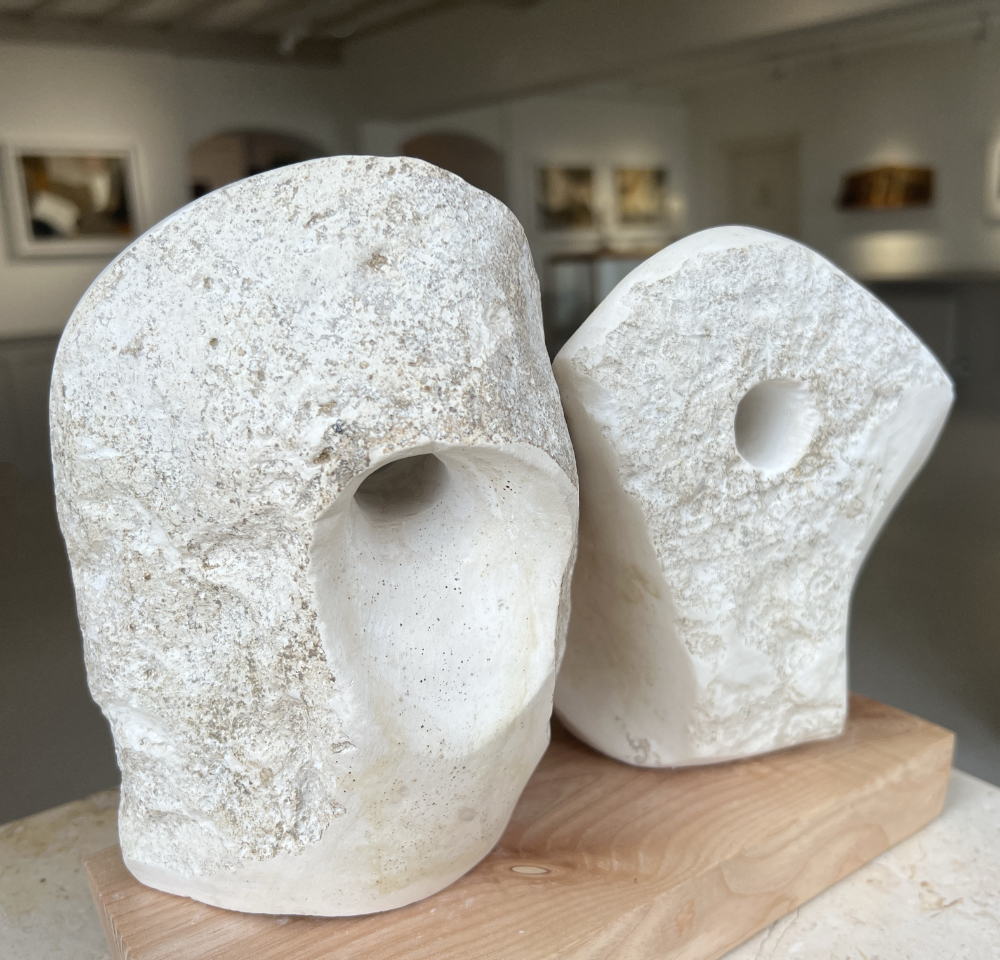
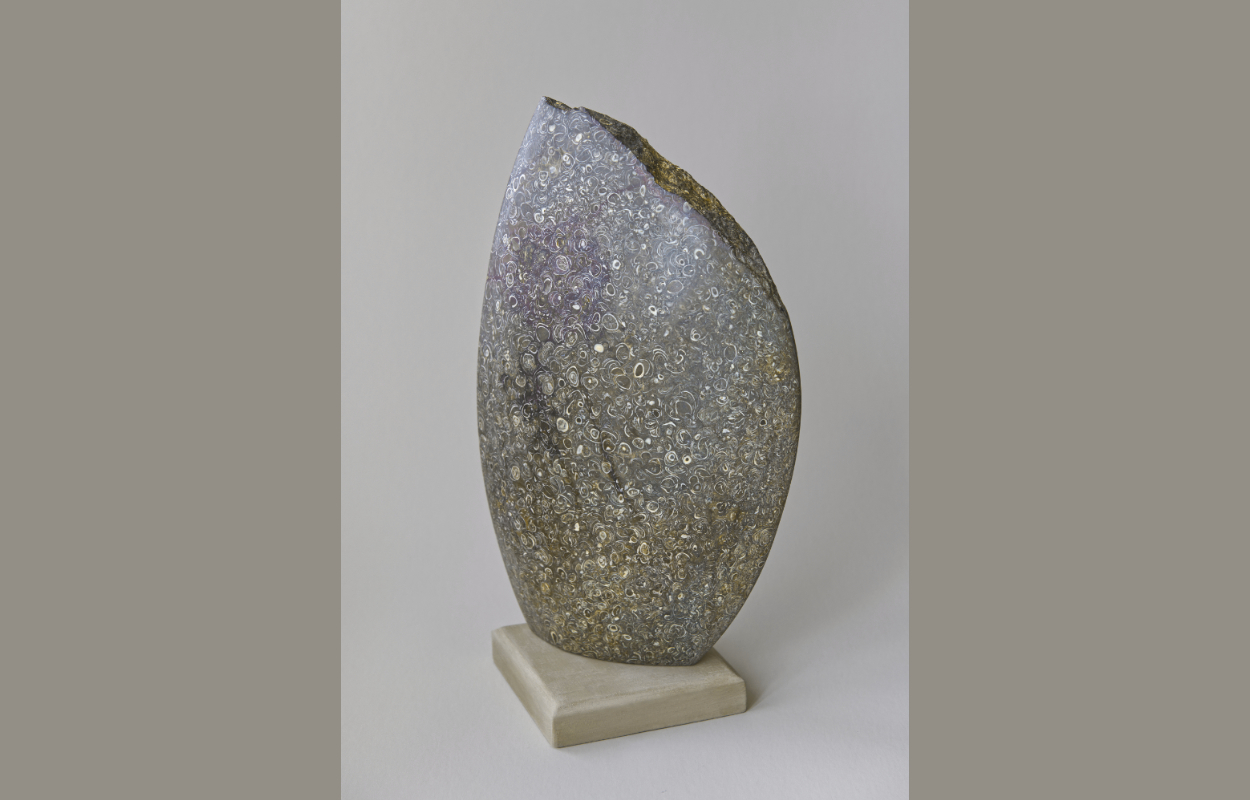
mollusk [direct stone sculpture]
title: mollusk
artist: russell burden
date: 2026
media: sculpture: sideritic limestone matrix. plinth: salvaged georgian ceramic plinth, limestone matrix pigment
dimensions: 330mm x 210mm x 60mm (without plinth)
‘over 134 million years ago, colonies of tiny shells formed in wealden lagoons and the braided riverbeds of the sub-tropical valanginian age. now embedded in iron-rich calcitic stone, the fossils of those bivalves may still be discovered as rough-surfaced rocks in the fields and pools of lossenham. this sculpture’s monolithic form honours the ancient curves of the disarticulated bivalves seen within the stone’s matrix, reminding us that the materials in our sedimentary landscapes were once components of entirely different ecosystems and, by working the stone with chisels and files, the rocks’ minerals are returned to the silt and soil to be recycled in a myriad of ways.’
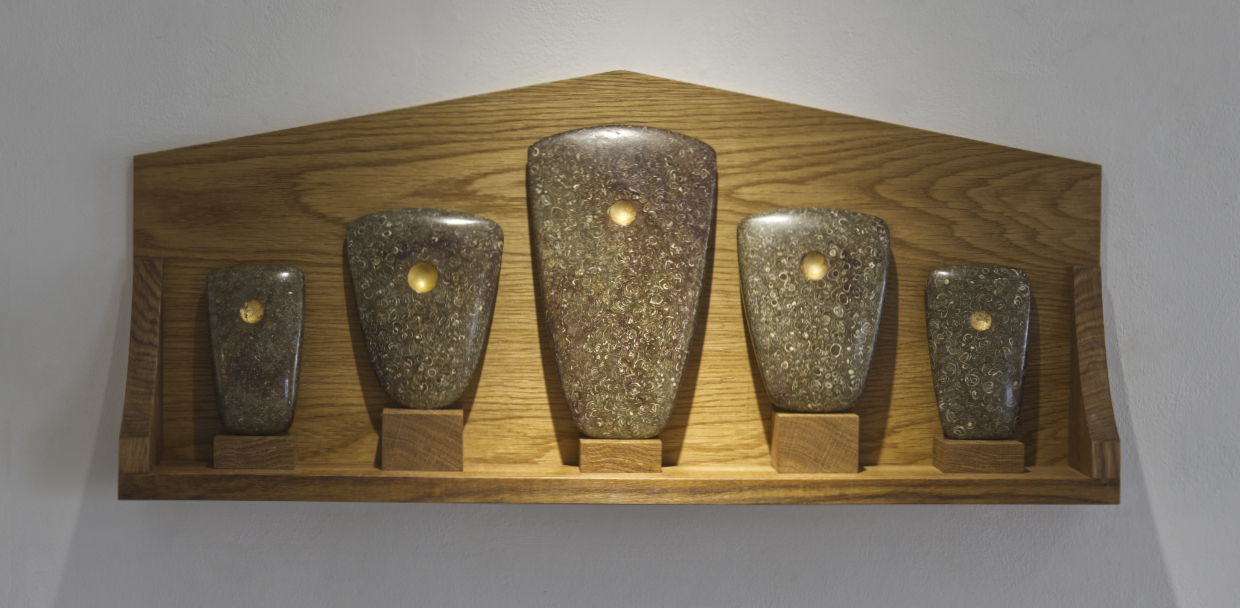
forms of clearance [direct stone sculpture]
title: forms of clearance
artist: russell burden
date: 2025/26
media: sideritic limestone matrix, lossenham hematite, gold leaf
dimensions: 330mm x 745mm x 108mm (including frame)
‘in this series, the axe form is understood to be one of the oldest and longest-used man-shaped objects. it may be seen equally as creative or destructive: a tool to deforest the world, or a tool to shape a work of art. the axe has long been used as a votive object, a symbol of polarity, of both light and darkness. it appears as a mythic symbol in many cultures: the keraunos, thunder weapon of zeus, the double-edged labrys of the minoans, or the tibetan dorje… all metaphysical tools that may be used to shape the spiritual self, or shape the ego. the forms in this series possess a concave hollow, a portal to the vitality of the stone itself and loci of votive intention.’
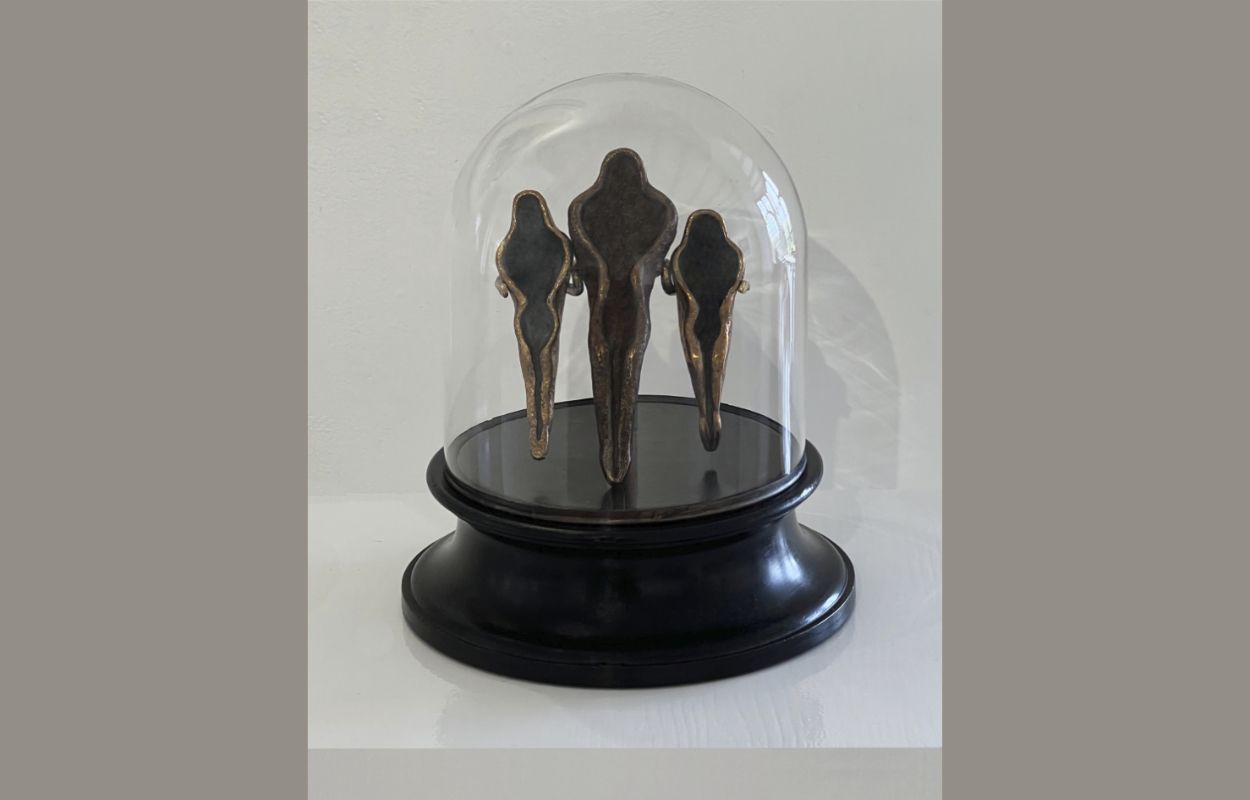
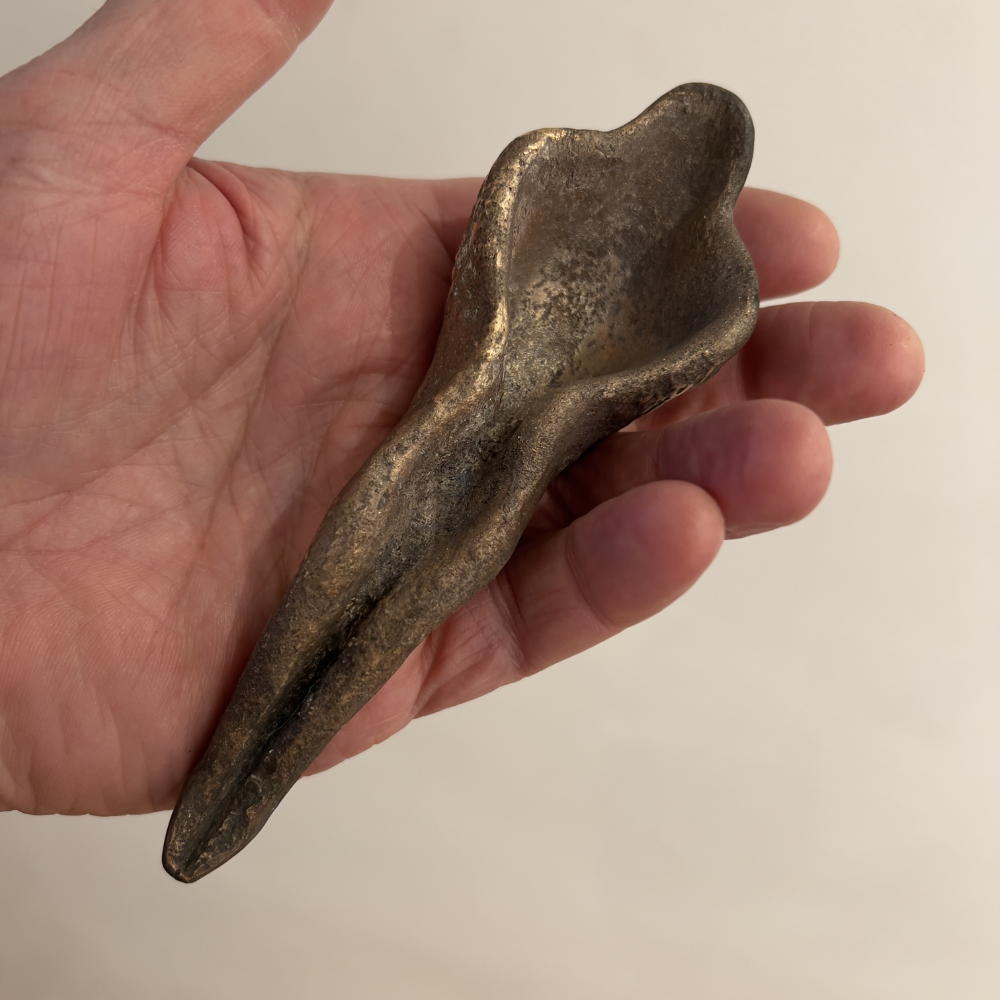
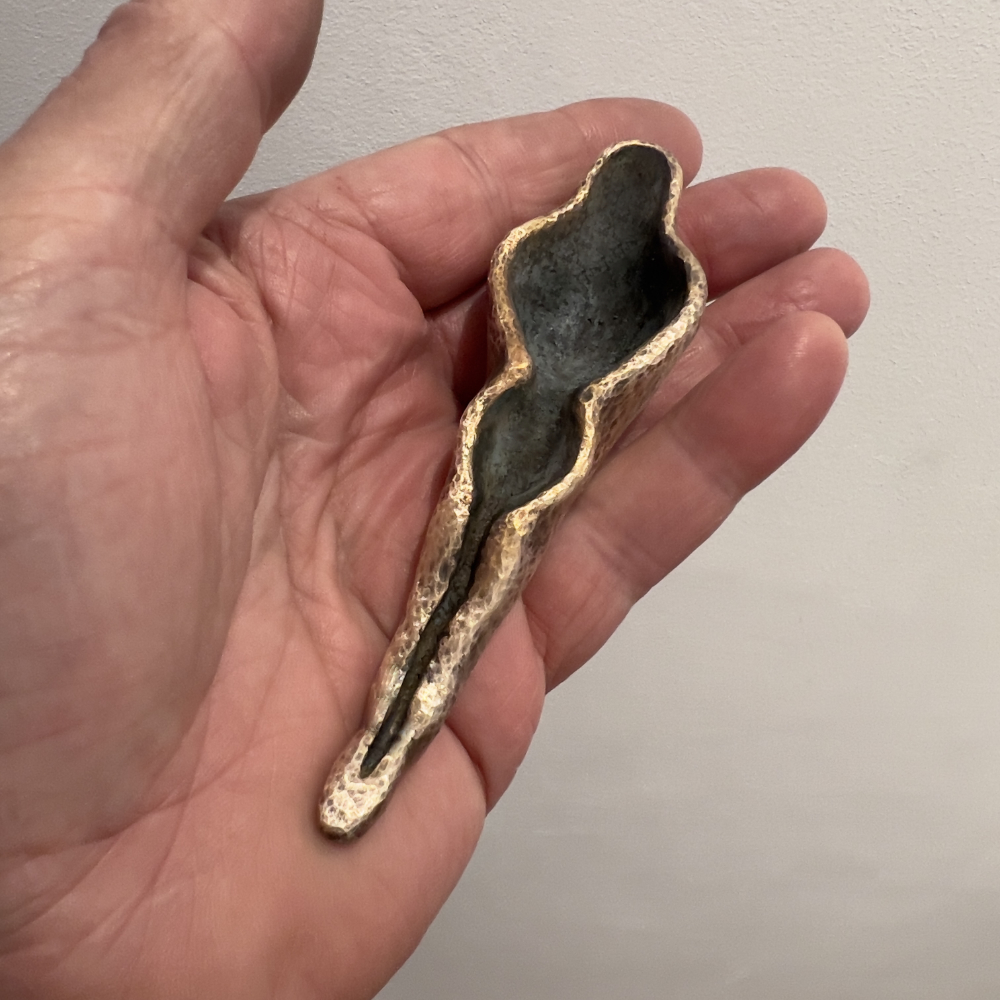
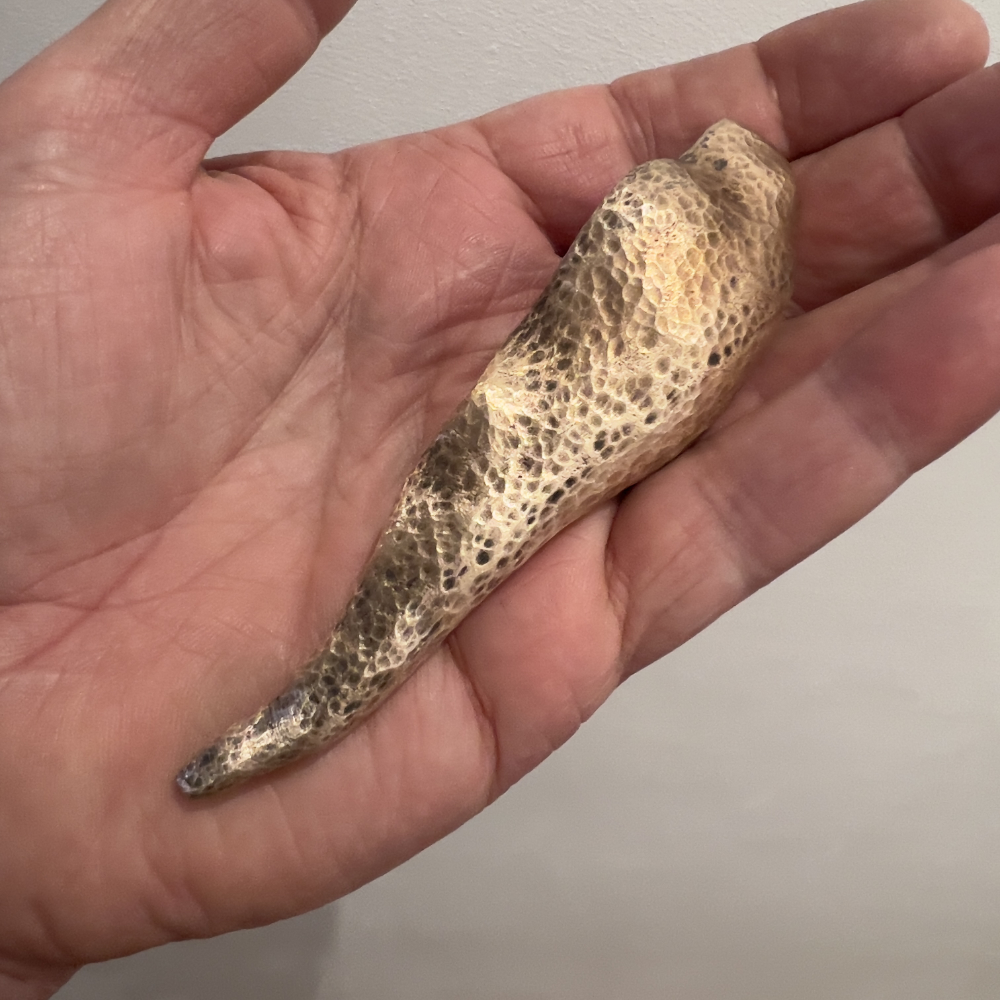
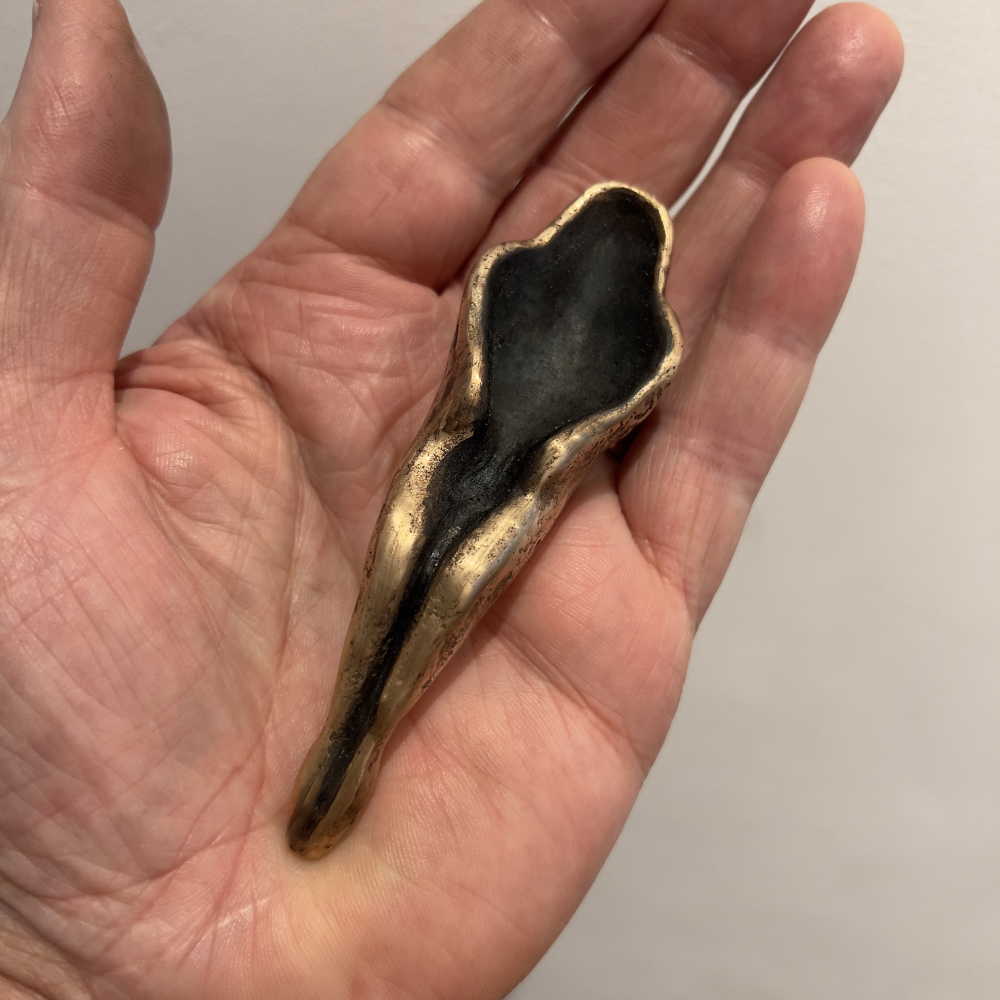
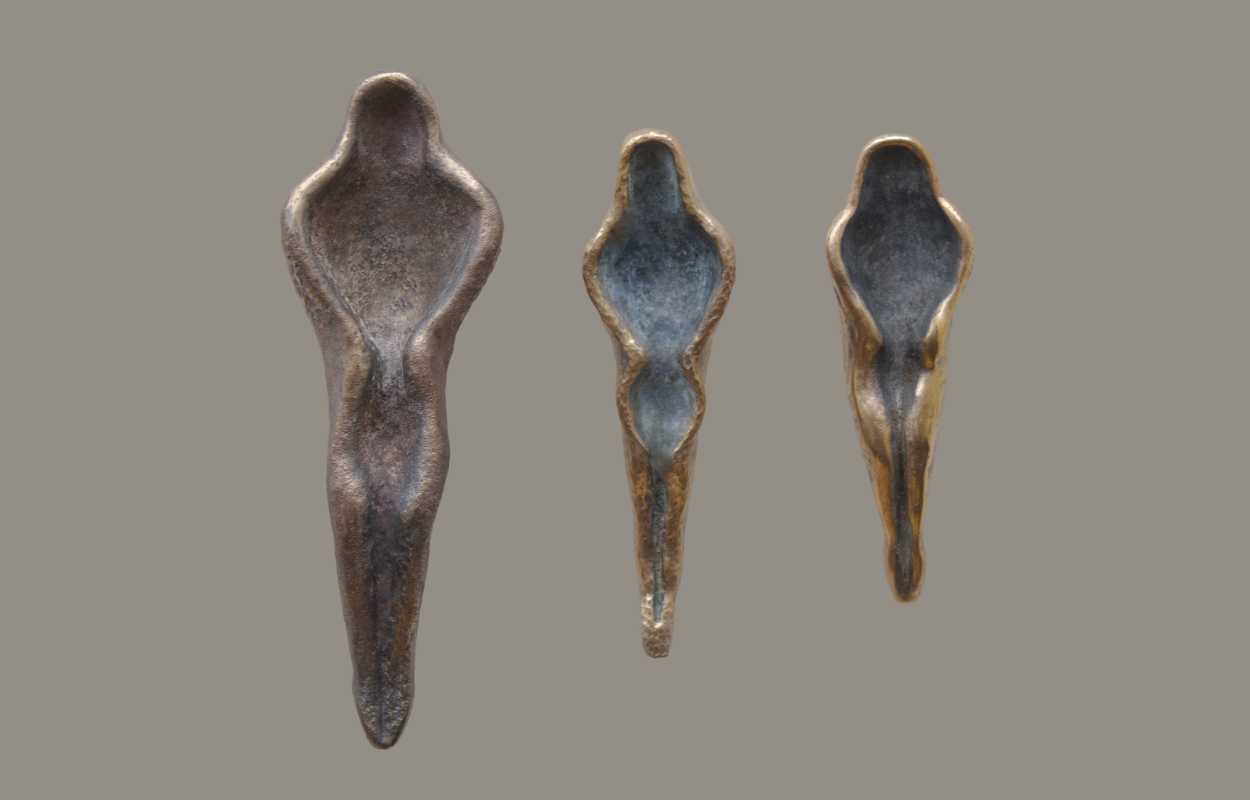
vessel figures [lost wax bronze]
title: vessel figures
artist: russell burden
date: 2026
media: silica bronze, chemical patinas, brass, copper, reclaimed plinth, glass dome
dimensions: 240mm x 195mm x 195mm (dome encasement)
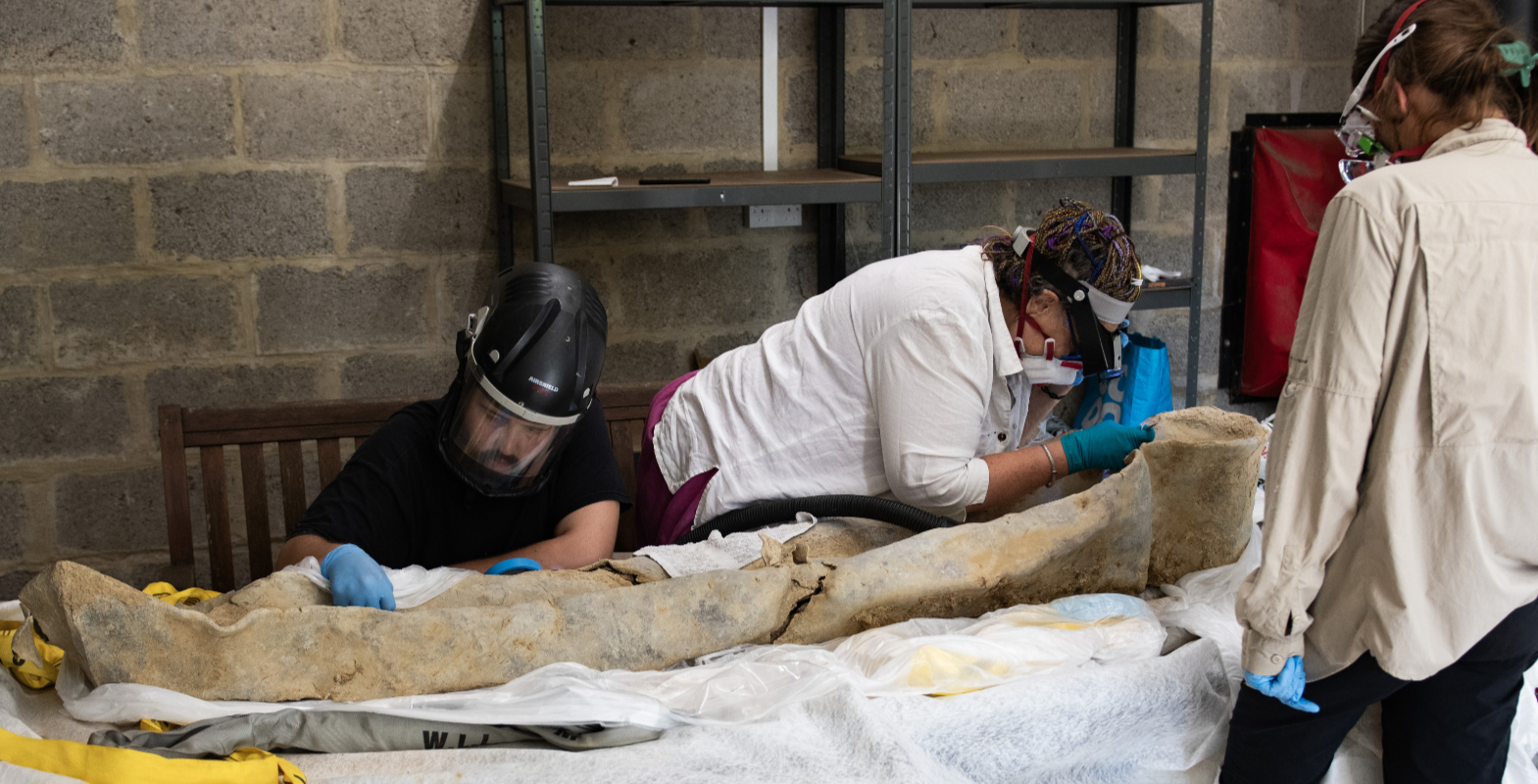
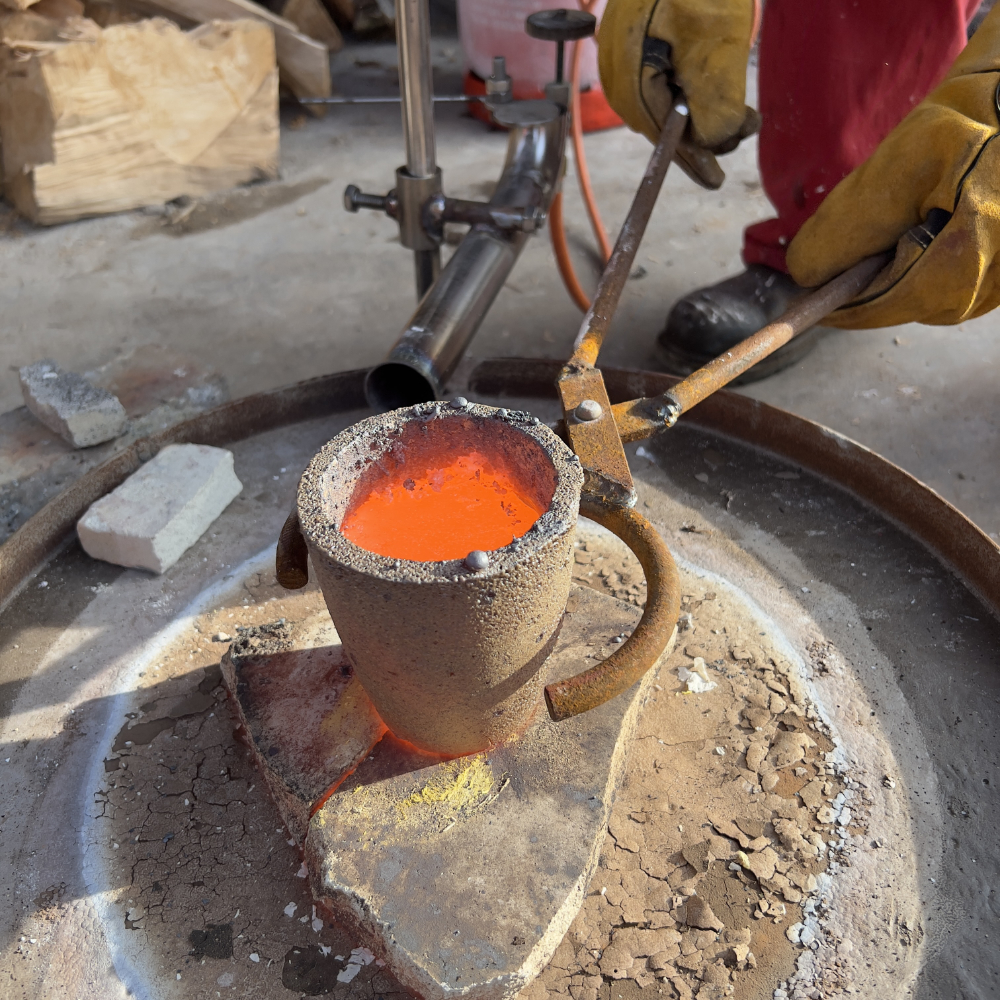
‘a response to an anthropoid (human-shaped) lead coffin discovered buried in front of the lossenham priory altar. these figures are shown as empty vessels; they describe the notion of kenosis (self‑emptying), the emptying of self; vessels emptied, ready to be filled, receptive to the experience of a spiritual fullness (pleroma). the carmelite mystic, st. john of the cross, evoked imagery of the soul being emptied, purified, or made receptive – nada, a state of unknowing, is reflected upon in st. john’s ‘dark night of the soul’.
held [assemblage sculpture]
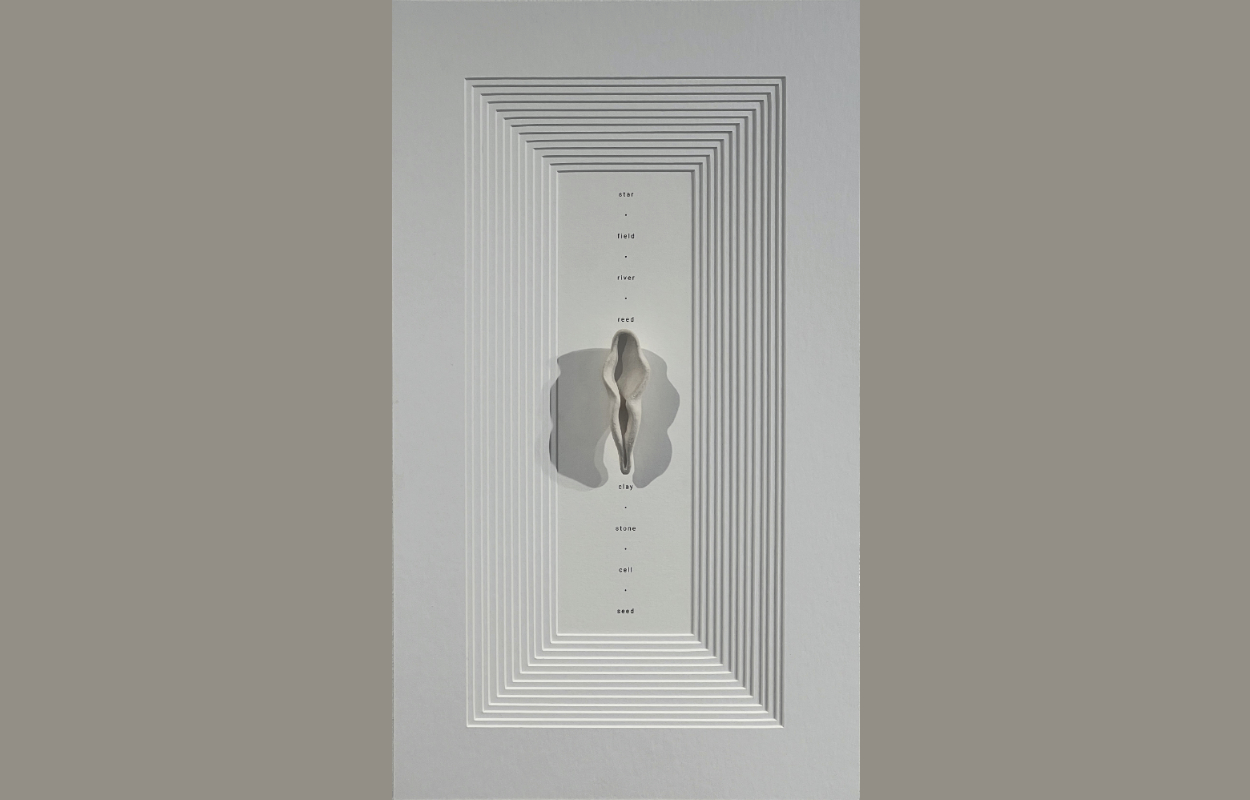
title: held
artist: russell burden
date: 2026
media: cotton paper giclee, card, plaster, priory foundation chalk
dimensions: 530mm x 310mm x 30mm
‘here, the human is formed or moulded from the dust of the ground, or the clay of the earth, to be ultimately returned to the ground. ‘thine hands have made me and fashioned me… thou hast made me as the clay.’ (1611, job 10:8-9). in the summa theologica written during the time of the lossenham priory (c. 1265–1274), thomas aquinas calls the body ‘the material principle’ as its matter is taken from earth; it is born into goodness and beauty. beauty being a manifestation of the very goodness within things. in heideggerian terms, humans may feel themselves as having been unwittingly cast or thrown into life and, perhaps, held by the universe.’
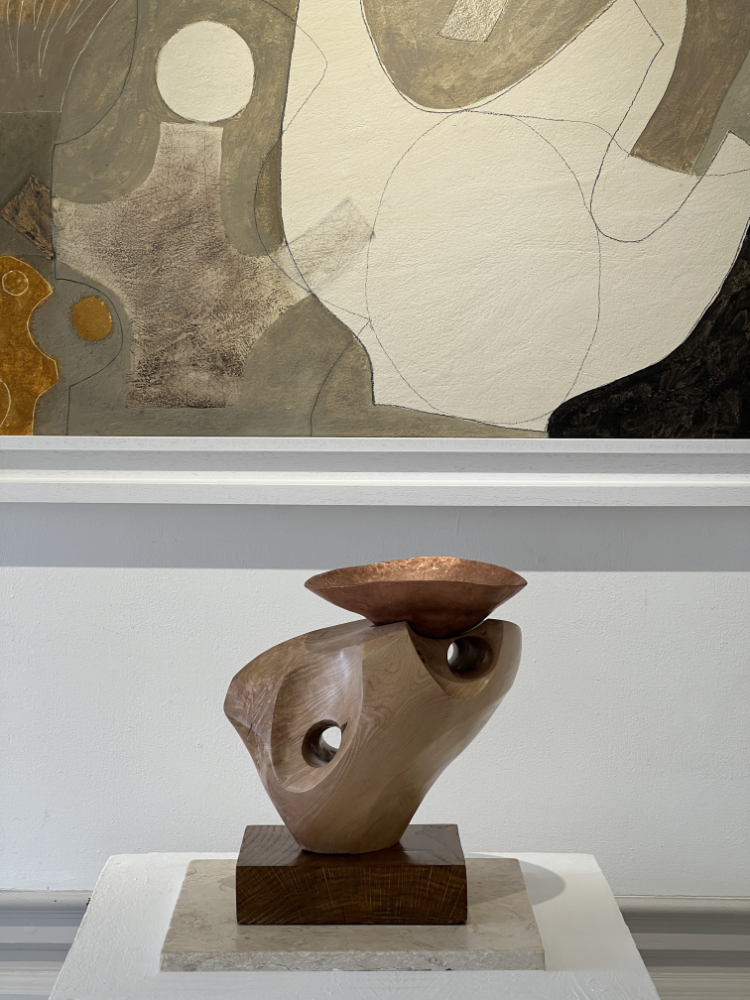
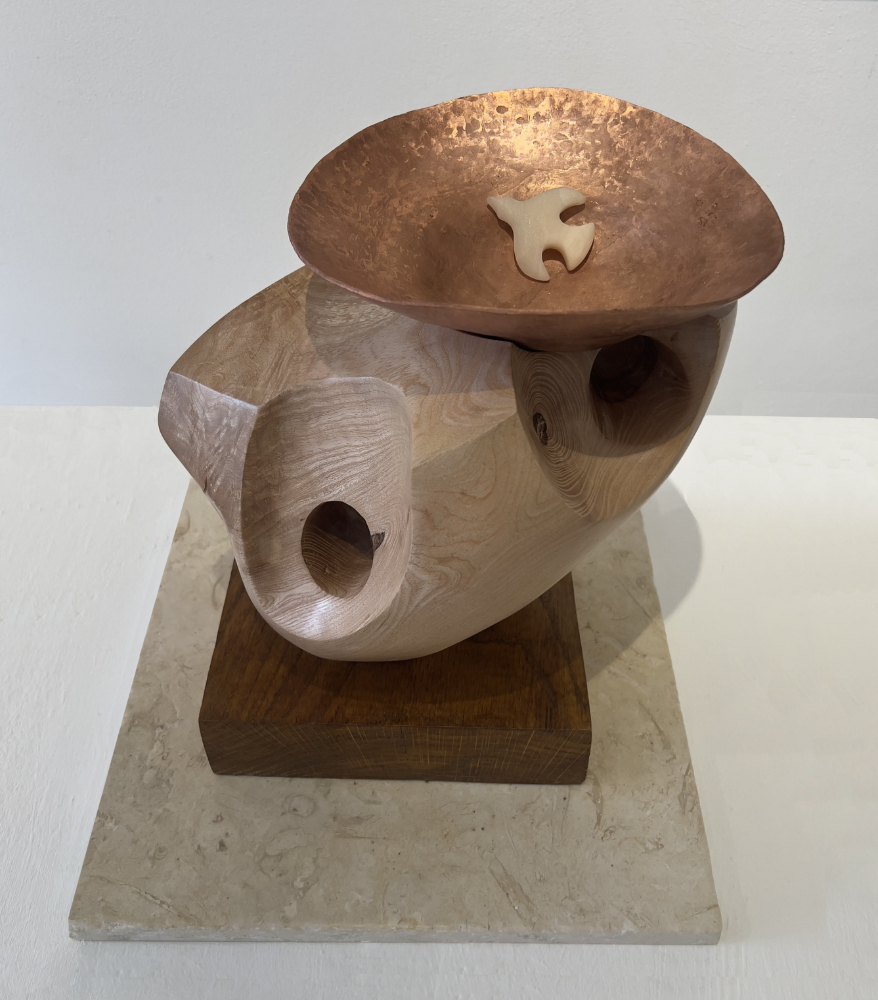
white votive bird [soft stone sculpture]
title: white votive bird
artist: russell burden
date: 2026
media: white calcite alabaster
font sculpture: melvyn evans
hammered copper bowl: alison evans
dimensions: 50mm x 40mm x 10mm (bird only)
‘during ancient times, calcite alabaster was quarried just an hour and a half (as the bird flies) from mount carmel in the te’omiman cave. the white bird is a votive offering to the font’s water, water that still gathers in the pools beside the priory foundations. the whole piece is the combined work of three individuals: font, bowl, and bird, evoking the carmelites’ spiritual charism in the lossenham landscape during the medieval period.’
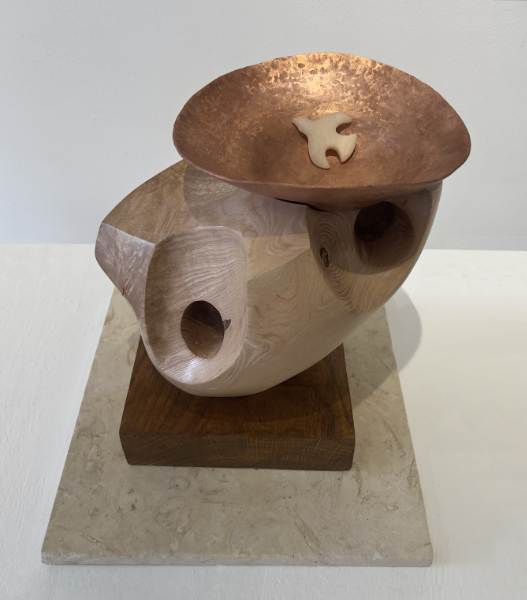
font by melvyn evans
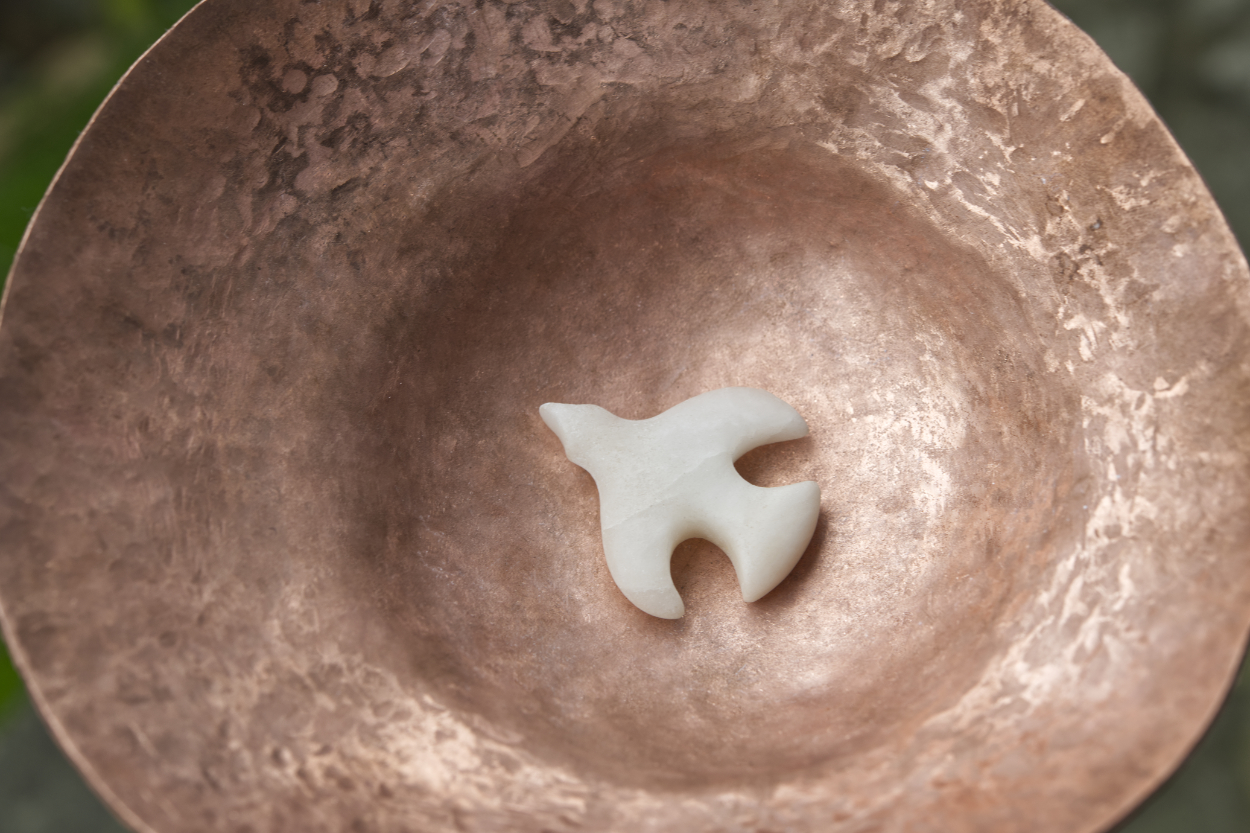
white bird by russell burden & copper bowl by alison evans
light field : dark field [giclee print diptych]
Title: light field : dark field diptych
artist: russell burden
date: 2022
media: cotton giclee print, chalk, clay, charcoal, soil
location: Rother Levels
dimensions: 32mm x 48mm (per image excluding frame)
‘this hybrid process begins with a single photographic image printed twice. one field, two states. each print is layered with natural materials gathered from the photographed landscape. the final works are then re-photographed and printed on cotton giclée paper. here polarity is ever moving, night and day, dark and light, the changing atmospheres of the empty field.’
-

light field (rother levels, kent. giclee image, chalk)
-

dark field (rother levels, kent, giclee image, charcoal, ash)
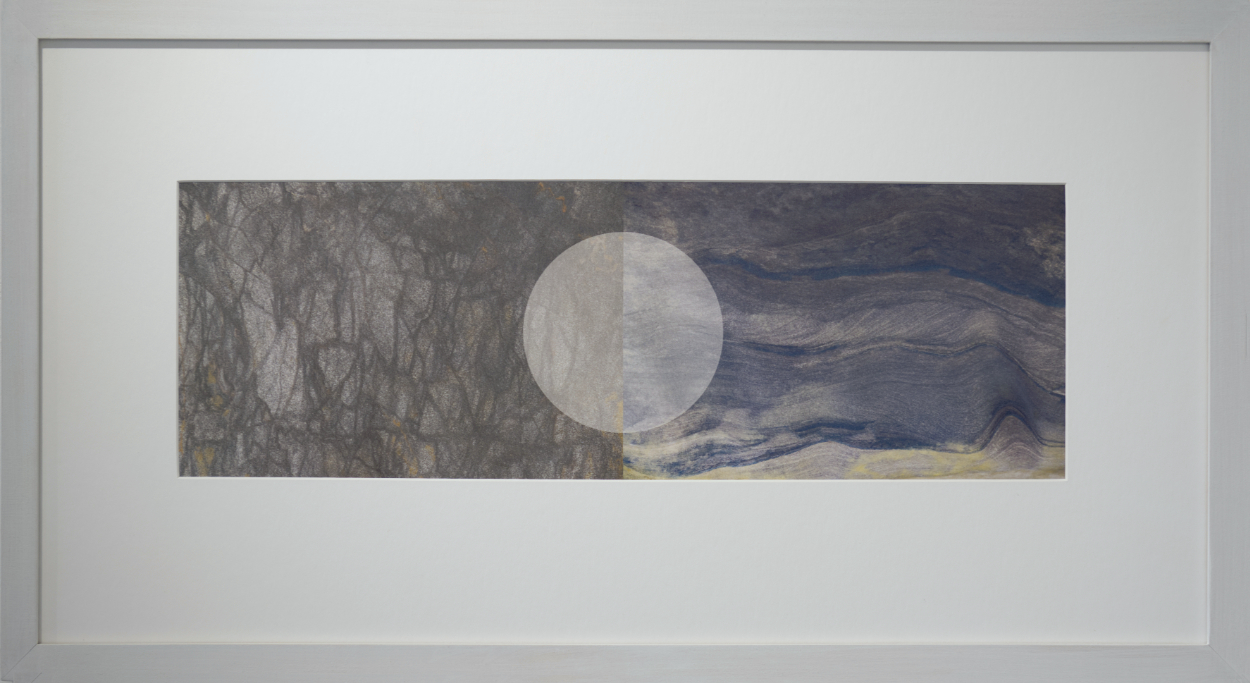
fluvial II, phase transitions [giclee print]
title: fluvial II, phase transitions
artist: russell burden
date: 2025/26
media: cotton giclee print
location: cliff end, east sussex
dimensions: 180mm x 540mm (image)
‘two geological sections of the wadhurst formation are shown. on the left, bioturbation is evident: tiny burrows filled with dark material in a lighter ground. on the right, layers of deposition reveal cyclical sequences of differing material influxes. the circle’s two hemispheres symbolise the circadian cycles of the sun and moon, creators of tides and currents in bodies of water.’
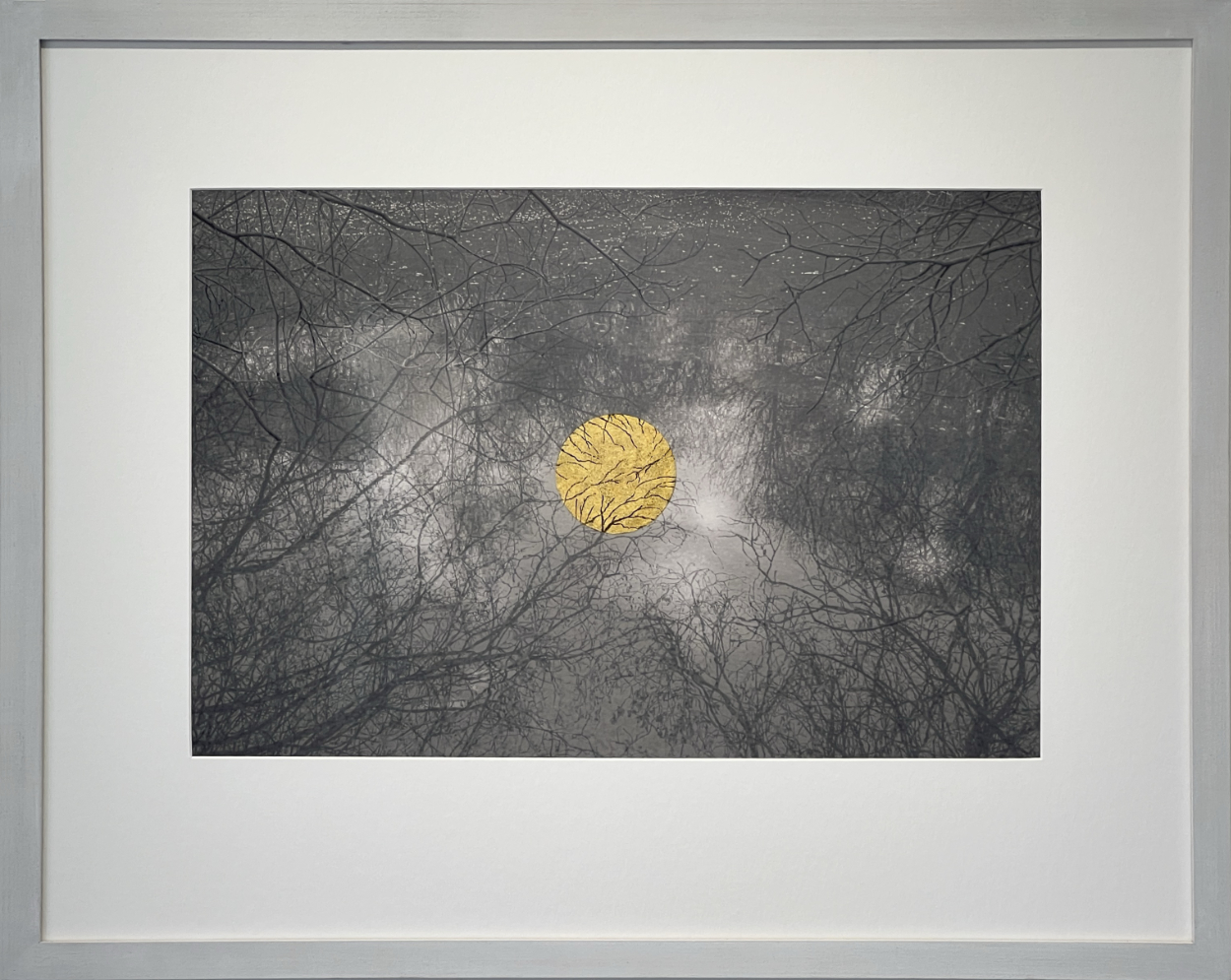
locus I : circadia [giclee print with metal leaf and carbon ink]
title: locus II, arcadia
artist: russell burden
date: 2024
media: cotton giclee print, gold size, gold leaf, carbon ink
dimensions: 395mm x 490 (image)
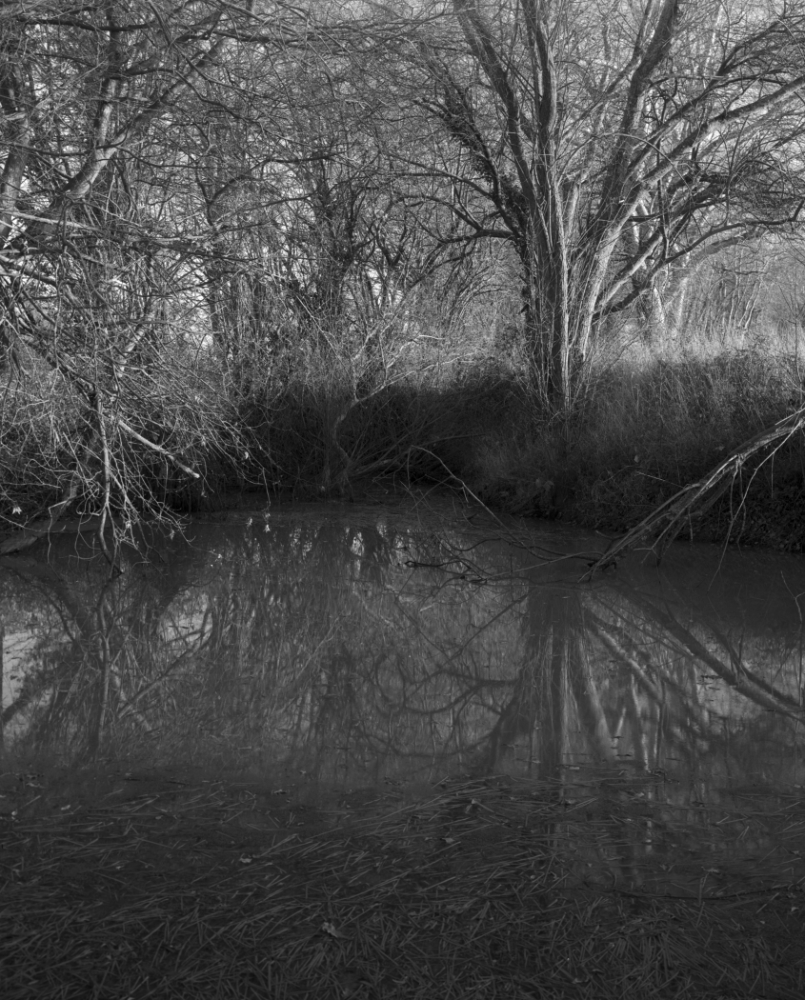
‘the surface of the deep, the reflections in a lossenham pool. sometimes the surface an opaque membrane, other times deep with transparency. within the pool, the visible and the invisible are both present – the factual and the imaginal. it contains things bathed in the light of the world and those hidden within the realms of the unconscious.’
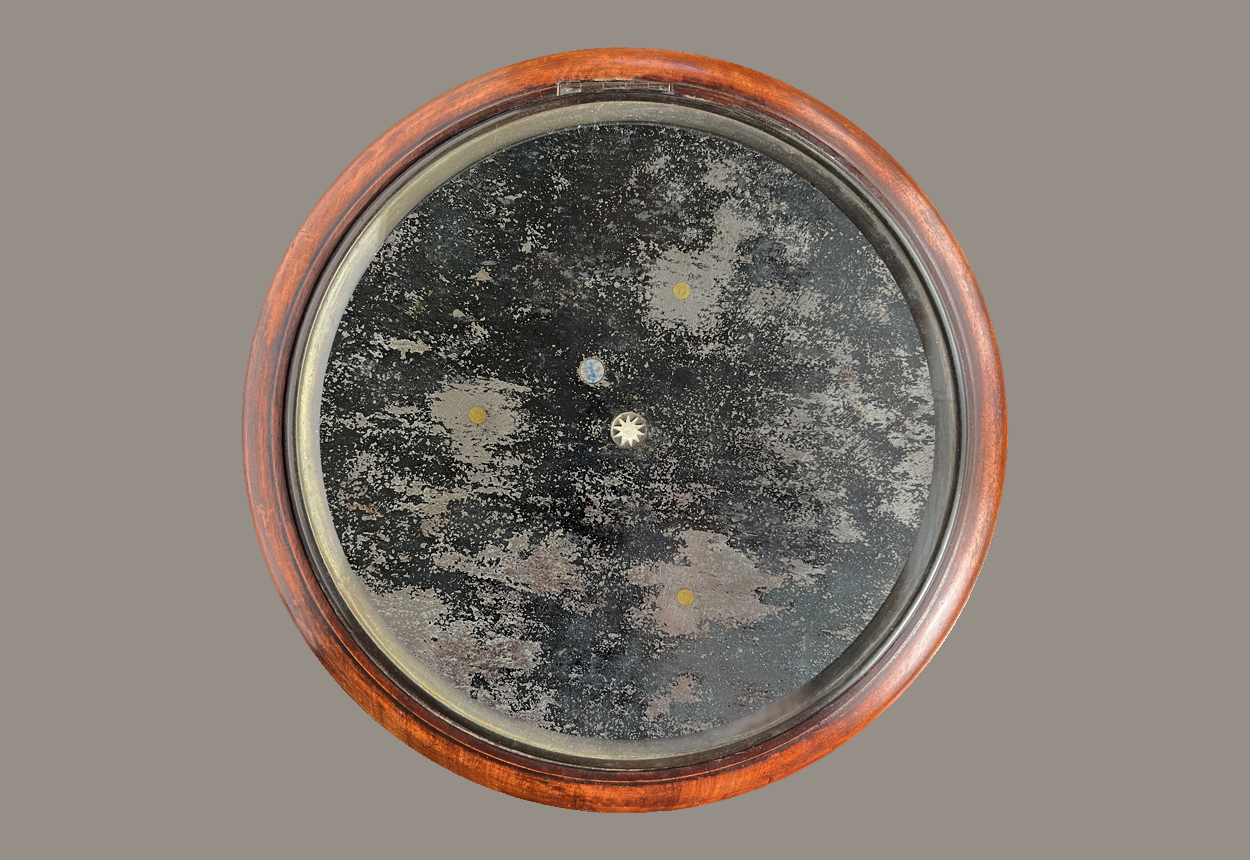
timefulness III : a place between stars [found object assemblage]
title: timefulness #3, a place between stars
artist: russell burden
date: 2025
media: bracket clock, clock plate, antique bead and mother-of-pearl boot stud
dimensions: 370mm x 370mm x 68mm
‘here the face of the artist’s childhood clock has been removed to reveal what lies behind, a worn steel backing plate with a sense of the night sky. the central hand hole now filled with a foraged boot stud of mother-of-pearl and, reminiscent of the planet earth, a sodalite bead inhabits the winding hole. three brass mechanism posts complete the constellation, and where hands that measured the minutes and struck the hours once orbited numerals, a celestial diorama of timefulness has emerged.’
pietra dura [photomontage]
title: pietra dura
artist: russell burden
date: 2021
media: cotton giclee print on board
location: cliff end, east sussex
dimensions: 610mm x 545mm
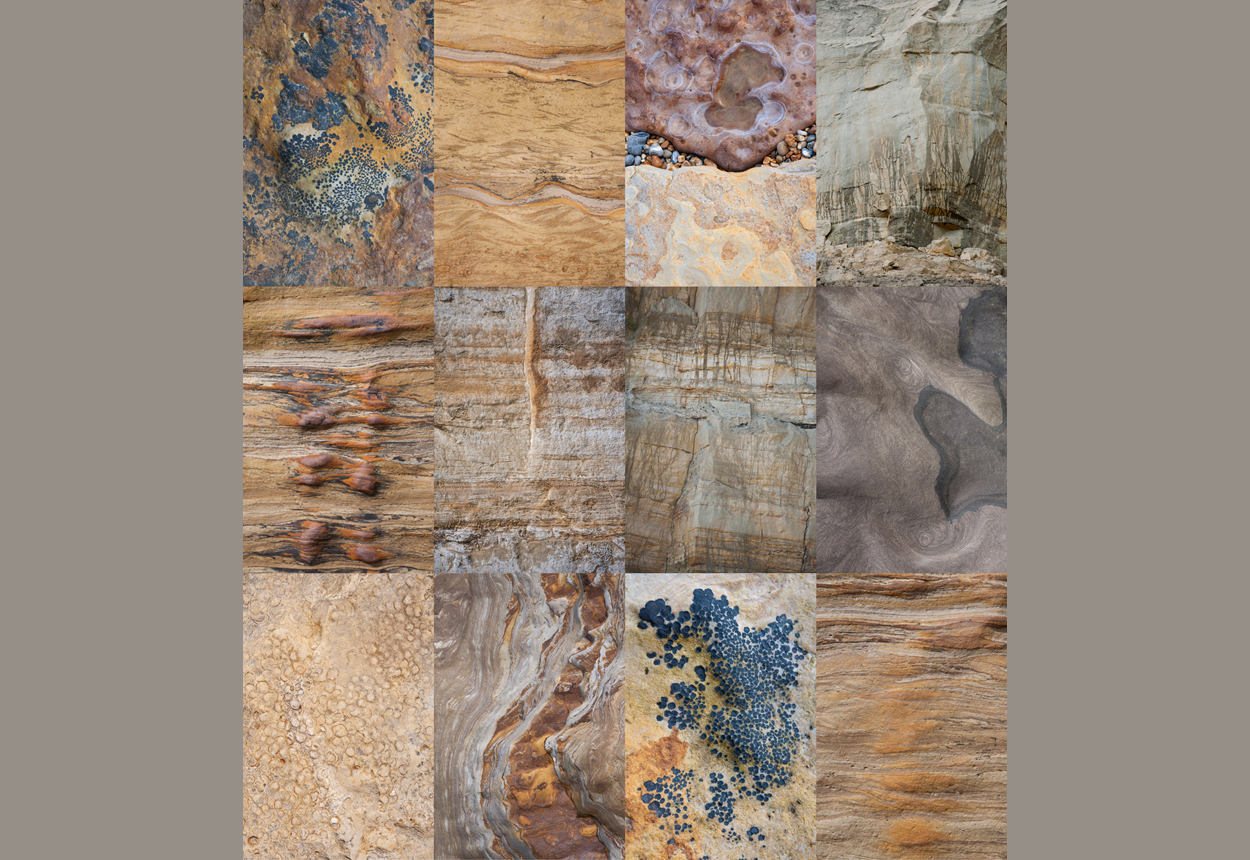
‘the strata and fallen blocks at cliff end evoke a sea-worn sense of the geological sequence beneath the lossenham landscape. these silts, sandstones and iron formations underpin the clay-laden matter of the artist’s residency. a particular horizon high above the beach holds a fossil-rich archive in which disarticulated iguanodons, crocodiles, turtles and armoured fish abound.’
beyond the rush of the air [subaquatic soundscape] with melvyn evans
title: beyond the rush of the air
artist: russell burden
date: 2025
production: hydrophone field recording, audio processing, various instruments
hand crafted violin bow played by: melvyn evans
location: by priory field, lossenham, kent
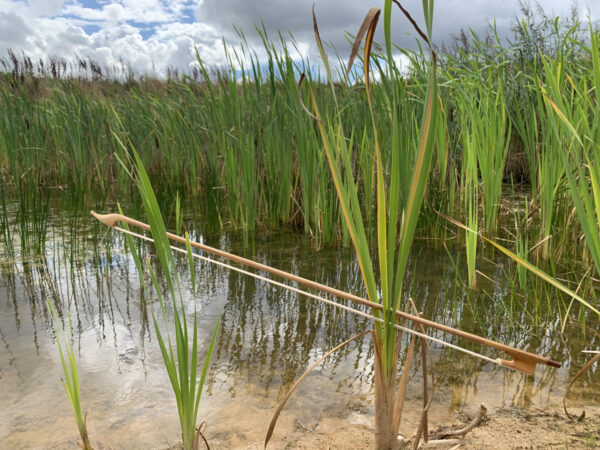
‘beneath the surface of a lossenham pool, inaudible to the human ear, lies an unexpected acoustic ecology of insect stridulations and hydrological sounds. this has inspired a music of shimmering drones, a complex microcosm of tiny harmonies punctuated occasionally by instruments and the layered tones of single violin strings drawn by a bow made of yew.’
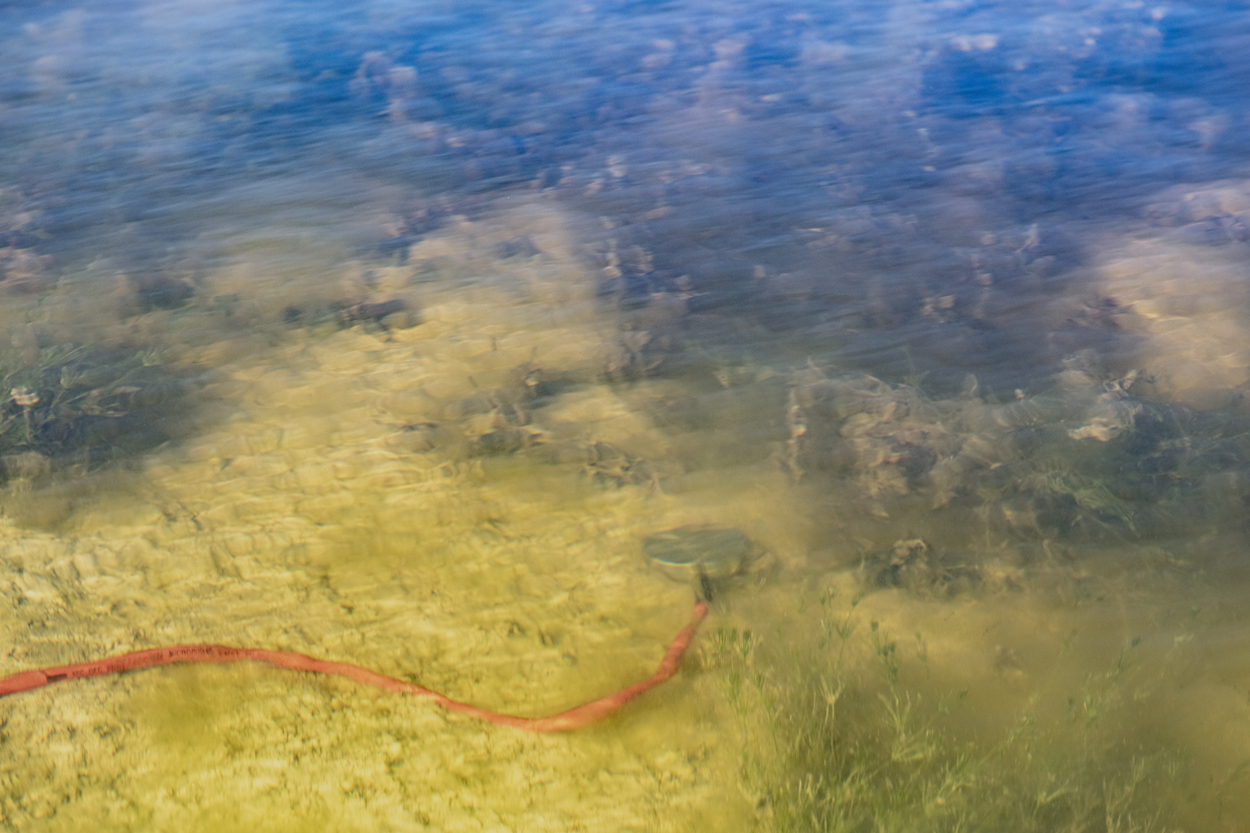
beyond the hush of the air - subsurface sound piece (hydrophone recording, lossenham pond, 2025)
uncertain boundaries [film] by kit warren
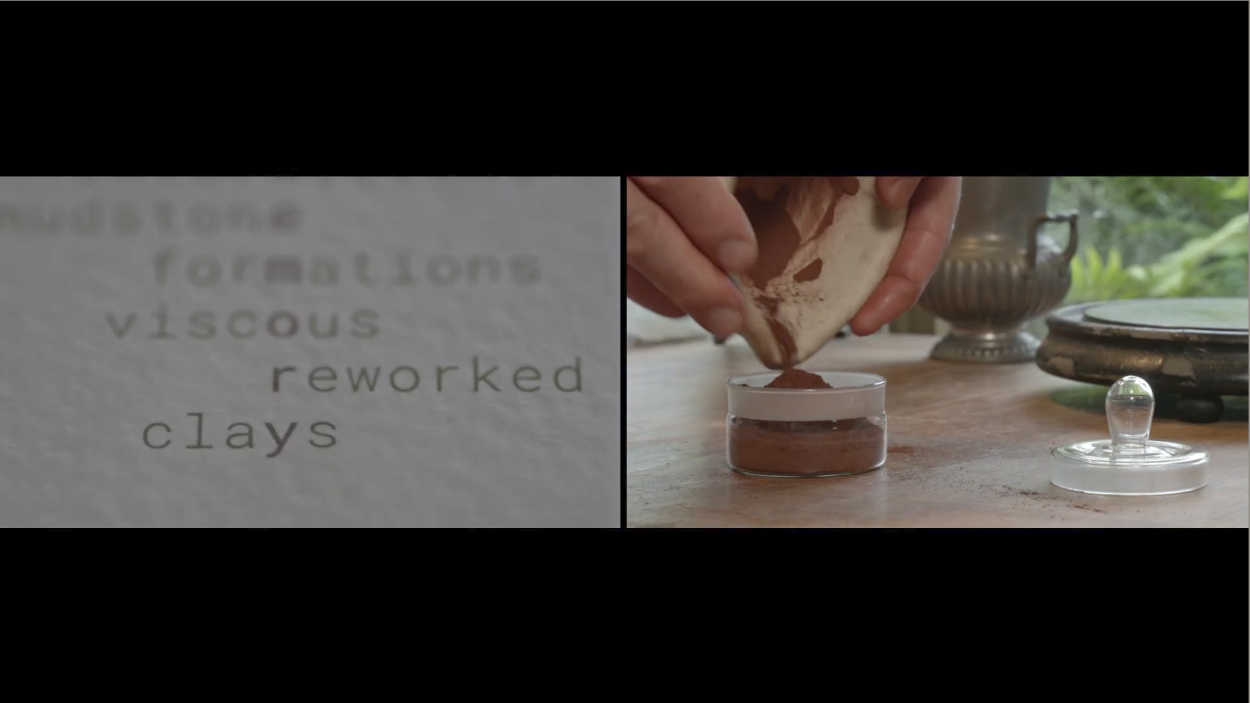
title: uncertain boundaries : a lossenham residency
artist: russell burden
film by: kit warren
media: Digital video
sound and mixing: kit warren and russell burden
editing and colour: kit warren
additional recordings: russell burden
cello improvisation: rachel dawson (from track 2, Lossenham Frequencies)
duration: 38mins
production period: 2024/25
‘a film by kit warren about russell burden’s art residency at lossenham explores a selection of work across various media and related practices. this includes a variation of track two, ‘a charm to weave belonging’ from russell’s suite of musical compositions, ‘lossenham frequencies’, featuring cello played by rachel dawson.’
headphones and full-screen viewing recommended…
melvyn evans [co-artist]
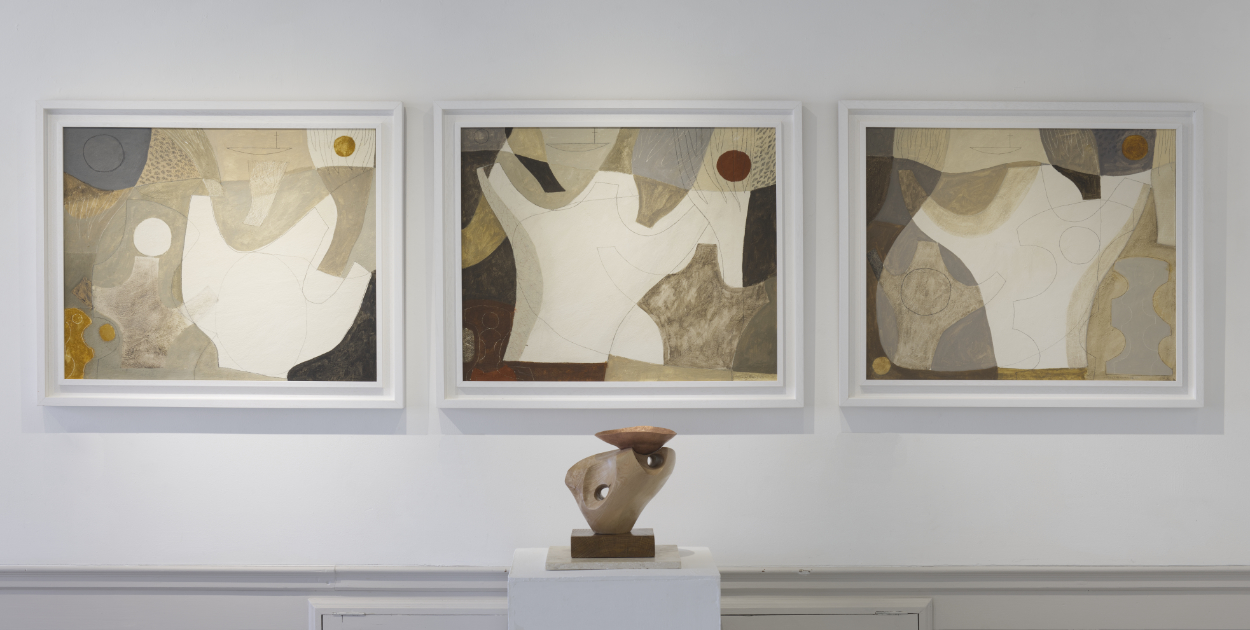
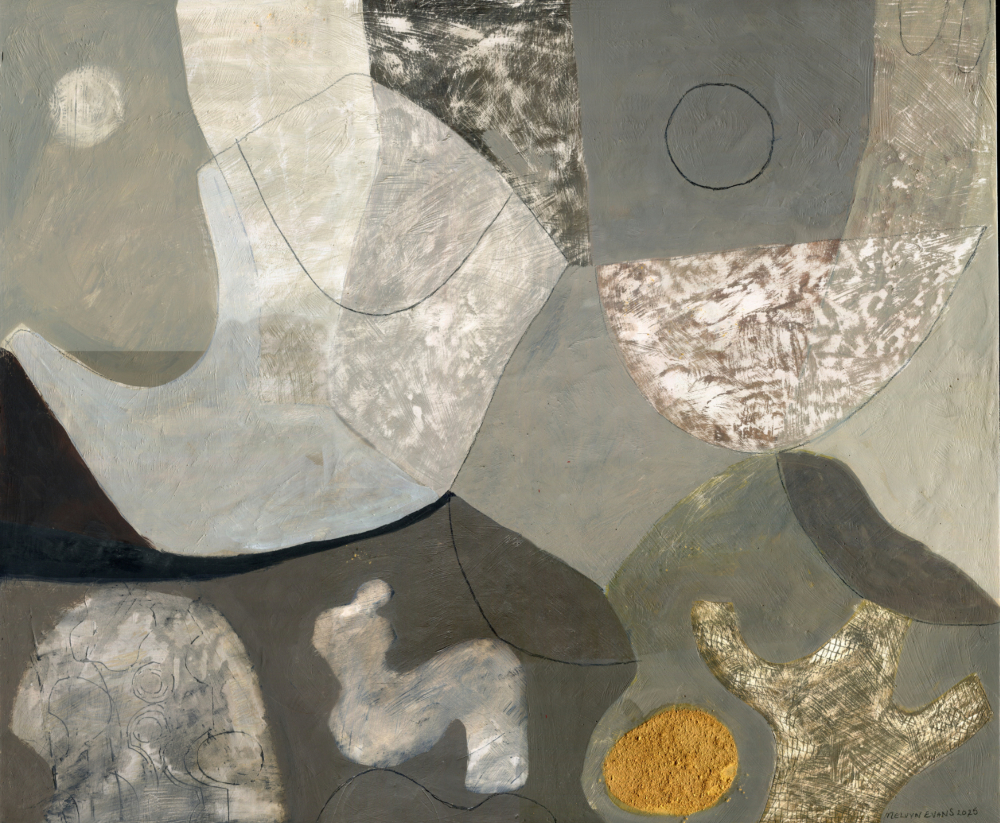
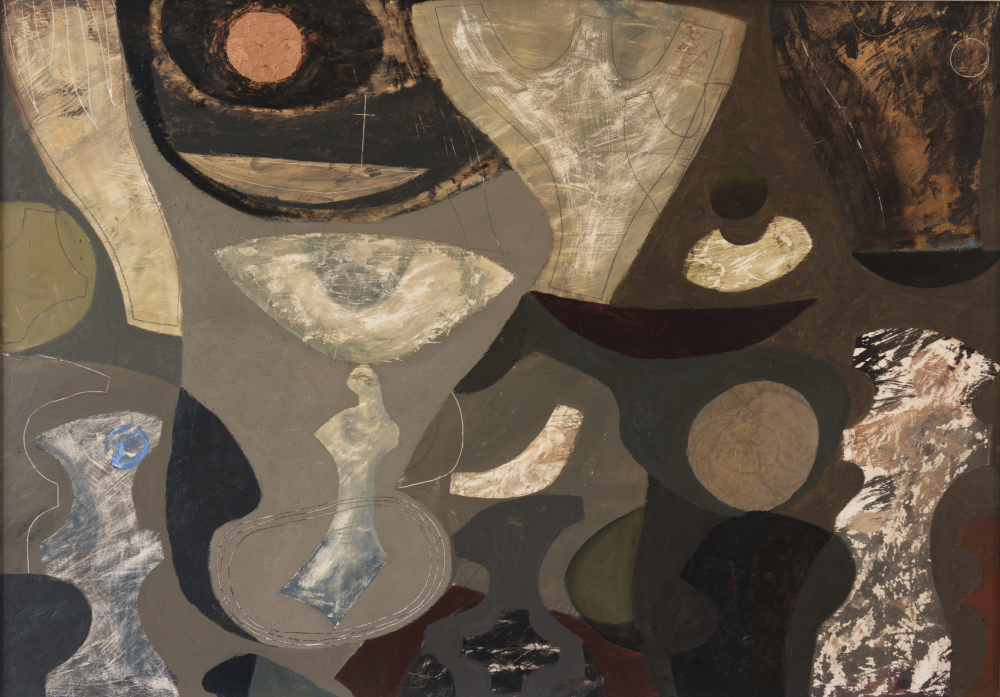
melvyn evans, triptych and font
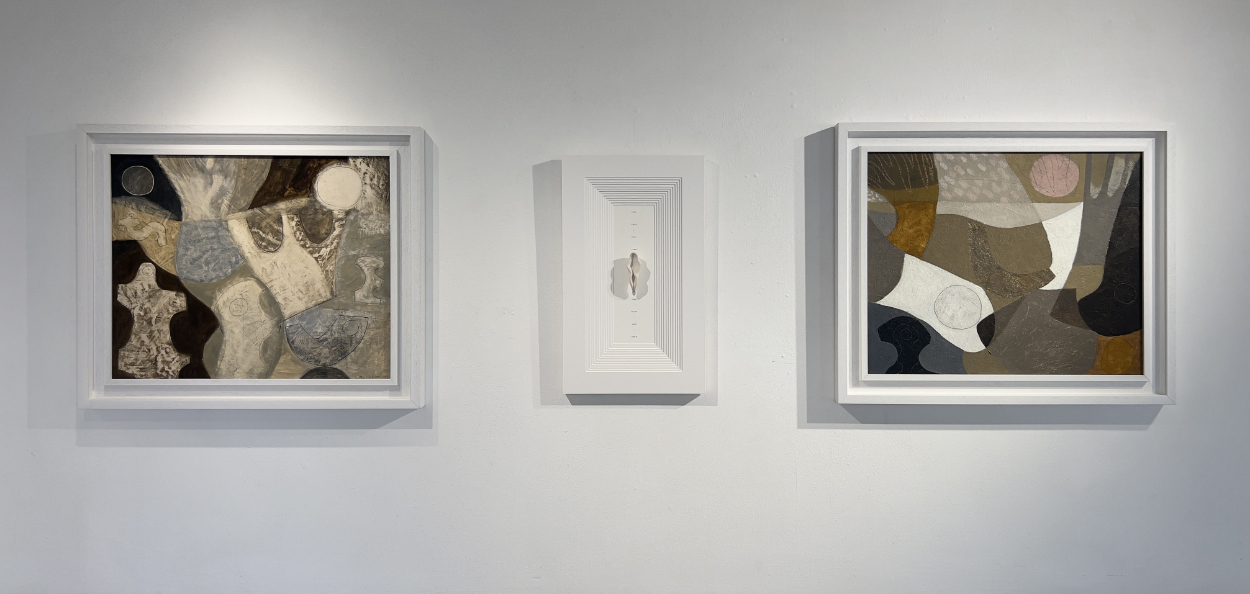
melvyn evans, paintings and russell burden 'held' assemblage